9 Best Air Purifiers for Small Rooms (October 2026)
The best small-room air purifiers include the Levoit Core 300-P for balanced small-room cleaning, the Levoit Core 200S for compact bedrooms, and the Blueair Blue Pure 511i Max for smart bedroom control.
On this page (9 sections)
- Which air purifiers are best for small rooms?
- How to choose the best air purifier for a small room
- What features matter for a small-room purifier?
- Where should you set up an air purifier in a small room?
- How should you use and care for a small air purifier?
- Can a small air purifier help with dust, pets or odors?
- Should you use a small purifier in a bathroom or basement?
- What mistakes should you avoid when buying a small air purifier?
- Which small-room air purifier should you choose?
The Levoit Core 300-P is the best air purifier for most small rooms, with a stated room rating of 222 sq ft at 4.8 air changes per hour. For a smaller bedroom, the Core 200S is rated for 140 sq ft at that rate; for a very compact space, Clorox gives a specific 80 sq ft rating at five air changes per hour.
A small-room purifier should match your room size at a useful air-change rate, fit where air can move freely, and have controls you'll use. A large maximum coverage number may be based on only one air change per hour, so check the conditions behind that figure.
These picks suit different priorities: quiet sleep, automatic fan control, visible air readings, pet fur or a very small footprint. If dampness is driving an odor, a purifier cannot fix its source; see air purifiers for musty smells and air purifiers for basements.
Our picks at a glance
-
1

-
2
-
3

Which air purifiers are best for small rooms?
The Levoit Core 300-P is the strongest all-round fit here for a small bedroom or office, with a clear room rating and quiet Sleep Mode. The other options fit narrower needs, from compact bedrooms to pets, automatic controls and tabletop placement.
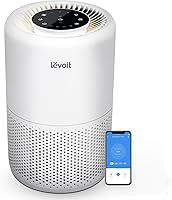
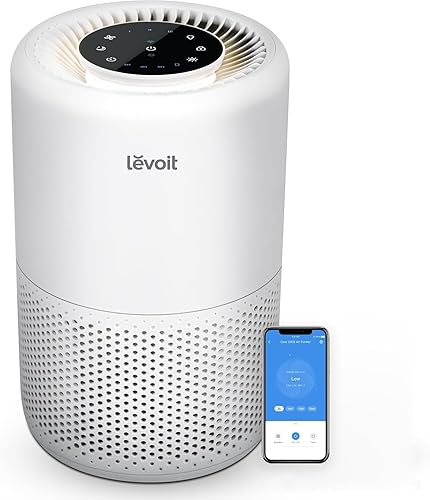
Levoit Core 300-P: Best for balanced small-room cleaning
- AHAM-verified
- 222 sq ft at 4.8 air changes per hour
- Sleep Mode at 24 dB
- Display lights can be turned off
The Core 300-P pairs an AHAM-verified smoke CADR of 143 CFM with a 222 sq ft room rating at 4.8 air changes per hour. Sleep Mode runs at 24 dB, and you can turn off the display lights.
Pros
- AHAM-verified
- Room rating includes 4.8 air changes per hour
- Sleep Mode and display-off option
Cons
- No Auto Mode or smart connectivity
- 120V use only in the United States
The Core 300-P suits a bedroom or home office where you want a substantial room rating without giving up a quiet night setting. Its smoke CADR is 143 CFM, and its rating is 222 sq ft at 4.8 air changes per hour.
Sleep Mode runs at 24 dB, and you can turn off the display lights. The Core 300-P does not have Auto Mode or smart connectivity, so choose it if manual fan control is fine and skip it if you want sensor-led adjustments.
For rooms smaller than its full rating, you can use a lower fan setting if that suits your needs, while remembering that lower airflow can mean slower cleaning.
Levoit Core 200S: Best for compact bedrooms
- 140 sq ft at 4.8 air changes per hour
- 360-degree air intake
- Noise as low as 27 dB
- App filter-life monitoring
The Core 200S is suited to a smaller bedroom, nursery or office, with a stated 140 sq ft rating at 4.8 air changes per hour. Its 360-degree intake and app filter-life monitoring add practical convenience.
Pros
- Compact design
- 360-degree air intake
- Display-off button
Cons
- Smaller room rating than the top pick
- Use genuine Levoit replacement filters
The Core 200S is a better match for a smaller bedroom, nursery or office, with its 140 sq ft rating at 4.8 air changes per hour. Its 360-degree intake helps when you need a compact unit that can draw air from around its body.
Noise is as low as 27 dB, and the display-off button helps limit light at night. The app can monitor filter life, but plan to use genuine Levoit replacement filters; skip this pick if your room is larger than its stated rating or you want a higher-capacity option.
Blueair Blue Pure 511i Max: Best for smart bedroom control
- 237 sq ft cleaned in about 12.5 minutes
- As quiet as 19 dB
- Air quality sensors adjust fan speed
- App control
The 511i Max combines a compact format with air quality sensors that adjust fan speed and app controls. Blueair says it cleans 237 sq ft in about 12.5 minutes and can run as quietly as 19 dB.
Pros
- Automatic fan adjustment
- App controls and filter reminders
- Low stated noise level
Cons
- Room-cleaning time is a brand claim
- Taller than some tabletop options
The Blue Pure 511i Max suits a bedroom where you want the purifier to react to changes in air quality. Built-in sensors adjust fan speed, while its app supports monitoring and filter reminders.
Blueair says it cleans 237 sq ft in about 12.5 minutes and runs as quietly as 19 dB. Pick it for sensor and app control; skip it if you prefer simple buttons without connected features or do not want a taller unit.
Its 360-degree intake gives you more flexibility in placement, though the unit still needs open space around it for airflow.
Levoit Vital 100S-P: Best for pet owners

- 222 sq ft at 4.8 air changes per hour
- Washable pre-filter
- Pet Mode
- App and voice assistant controls
The Vital 100S-P brings a washable pre-filter and Pet Mode to a 222 sq ft room rating at 4.8 air changes per hour. The VeSync app supports schedules, settings and filter-life checks.
Pros
- Washable pre-filter
- Pet Mode and wide U-shaped air inlet
- Sleep Mode as low as 25 dB
Cons
- The main filter is not washable
- Use official Levoit replacement filters
The Vital 100S-P is the pet-focused choice for a small room, with a wide U-shaped inlet designed to trap airborne fur and larger particles. It is rated for 222 sq ft at 4.8 air changes per hour and includes Pet Mode.
The pre-filter is washable, while the main and activated carbon filters are not. Sleep Mode runs as low as 25 dB, and the VeSync app supports schedules and filter-life checks; skip it if you want every filter layer to be washable.
DREO DR-HAP008: Best for visible air readings

- AHAM-verified 115 CFM CADR
- 178 sq ft at 4.8 air changes per hour
- PM2.5 sensor and AQI display
- Auto and Sleep modes
The DR-HAP008 has an AHAM-verified CADR of 115 CFM and a 178 sq ft rating at 4.8 air changes per hour. Its PM2.5 sensor and AQI display make air readings easy to check.
Pros
- AHAM-verified performance
- PM2.5 sensor and AQI display
- Auto and Sleep modes
Cons
- Smaller room rating than the top pick
- Scent diffuser is included, but oils are not
The DREO DR-HAP008 suits someone who wants a visible snapshot of particle levels. Its PM2.5 sensor tracks air quality, and the display shows AQI levels from 1 to 999.
DREO gives it an AHAM-verified CADR of 115 CFM and a rating of 178 sq ft at 4.8 air changes per hour. It offers Auto, Turbo, Sleep and Normal modes; choose it if you like seeing readings and skip it if the display and sensor features would go unused.
Winix A230: Best for sensor-led airflow

- 230 sq ft room rating
- True HEPA and carbon filters
- Air quality sensor
- Auto Mode
The Winix A230 pairs a True HEPA filter with a carbon filter for airborne particles and household odors. Its air quality sensor adjusts fan speed in real time in Auto Mode.
Pros
- Room rating suits many bedrooms
- Sensor adjusts fan speed
- Carbon filter targets household odors
Cons
- No room rating at 4.8 air changes per hour is given here
- PlasmaWave claims need separate consideration
The Winix A230 is a good fit if you want a sensor to adjust fan speed automatically and a carbon filter aimed at household odors. Winix gives it a 230 sq ft room rating and cleaning times for several room sizes.
Its True HEPA filter captures airborne particles, while the carbon filter is designed to reduce VOCs and odors from cooking, pets and smoke. The room-size figure is not paired with a stated air-change rate here, so choose it if Auto Mode matters and skip it if you want a direct comparison at a particular air-change target.
Medify MA-14: Best for tabletop placement

- 120 CADR
- Three fan speeds
- Sleep Mode dims panel lights
- Filter replacement indicator
The MA-14 is described as a tabletop purifier for small to medium spaces, with a CADR of 120 and coverage up to 470 sq ft in one hour. Its three speeds and Sleep Mode keep controls straightforward.
Pros
- Three fan speeds
- Sleep Mode dims panel lights
- Filter replacement indicator
Cons
- One-hour room rating is slower than some room-size claims
- The stated maximum noise is 55 dB
The Medify MA-14 is aimed at tabletop use and straightforward controls. It has a CADR of 120 and a stated coverage of up to 470 sq ft in one hour, so it makes more sense when you value a tabletop format over fast turnover in a larger room.
Three fan speeds, Sleep Mode and a filter replacement indicator keep operation simple. Its stated maximum noise is 55 dB, so skip this option if quiet operation at higher fan settings is a priority.
Blueair Blue Pure 511: Best for quiet manual use

- 180 sq ft cleaned in 12.5 minutes
- 24 dB on low
- HEPASilent dual filtration
- Washable pre-filter
The Blue Pure 511 keeps operation simple with a button control and a washable pre-filter. Blueair says it cleans a 180 sq ft room in 12.5 minutes on the highest fan speed.
Pros
- Compact footprint
- Low-speed noise stated at 24 dB
- Washable pre-filter
Cons
- No sensor or app controls described
- Fast room-cleaning figure uses the highest fan speed
The Blue Pure 511 fits a bedroom or office where you want simple button controls and a washable pre-filter. Blueair says it cleans 180 sq ft in 12.5 minutes on its highest fan speed, while its low setting is rated at 24 dB.
The included pre-filter is Arctic Trail dark gray, and other washable colors are available. Choose it for compact, uncomplicated operation; skip it if you want an air quality sensor or app controls.
Clorox Small Room Air Purifier: Best for tiny dorm rooms

- 80 sq ft at five air changes per hour
- 200 sq ft at two air changes per hour
- 360-degree intake
- Three speeds and timer
This tabletop model is the most clearly sized for a very small space, with five air changes per hour in 80 sq ft and two in 200 sq ft. It has three speeds, a timer and an adjustable night light.
Pros
- Clear room-size and air-change figures
- Compact tabletop design
- Timer and adjustable night light
Cons
- Lower air-change rate at 200 sq ft
- Filter replacement is needed
The Clorox Small Room Air Purifier is built for very compact spaces such as a dorm room, desk area or nursery. Clorox rates it for five air changes per hour in 80 sq ft and two per hour in a room up to 200 sq ft.
Its two-stage 360-degree filter pairs a pre-filter for larger particles with a True HEPA filter. Three speeds, a timer and an adjustable night light offer basic control; choose it for a tiny room and skip it if you need a higher air-change rate across a larger bedroom.
How to choose the best air purifier for a small room
Choose by room area and air-change rate first, then narrow the options by noise, controls, filter care and placement. This order helps prevent a large coverage claim from distracting you from how quickly a purifier is meant to clean the space.
Measure the room's length and width in feet and multiply them to get square footage. If you have a tall ceiling or an open doorway to another area, allow extra capacity because the air volume is greater or less contained.
Room ratings aren't all expressed the same way. The Core 300-P and Vital 100S-P are rated for 222 sq ft at 4.8 air changes per hour, while the Clorox model is rated for 80 sq ft at five changes per hour and 200 sq ft at two.
CADR can also help compare cleaning capacity when the figure is available. The Core 300-P has a smoke CADR of 143 CFM, and the DREO has an AHAM-verified CADR of 115 CFM.
After size, consider your routine. If you want the purifier to respond on its own, look for a sensor and Auto Mode; if you prefer straightforward operation, a manual model may be easier to manage.
For a wider explanation of room measurements and purifier capacity, see what size air purifier you need.
What features matter for a small-room purifier?
The useful features are the ones that fit your room and habits: a low-noise mode for sleep, automatic controls if you want them, and filters you can maintain. A compact body can save floor space, but only if it still has room for airflow.
For bedrooms, compare the quiet mode and whether display lights can be switched off. The Core 300-P has a 24 dB Sleep Mode and display-off option, while the Blue Pure 511i Max is rated as quiet as 19 dB.
Sensor controls suit people who would rather not change fan speed manually. The Blue Pure 511i Max and Winix A230 have air quality sensors, and the DREO adds a PM2.5 reading and AQI display.
Filter care affects how practical a purifier feels after setup. The Vital 100S-P and Blue Pure 511 have washable pre-filters, but that does not mean their main filters can be rinsed.
Where should you set up an air purifier in a small room?
Place the purifier on a stable, dry surface with space around its intake and outlet. A blocked intake, curtain or piece of furniture can restrict airflow, so avoid pushing the unit into a tight corner just to hide it.
Before you choose a spot, check the unit's footprint and the path of its cord. Keep the cord away from pets that might chew it, and keep the purifier away from splashes or areas where water may collect.
In a bedroom, place it where the airflow can circulate through the occupied part of the room without blowing directly into bedding. A tabletop model can help when floor space is scarce, but only use a stable surface that can support it.
If you move the purifier between rooms, choose the setting based on the current room's size and keep doors or openings in mind. A purifier sized for a closed small room may circulate less effectively across adjoining spaces.
How should you use and care for a small air purifier?
Run the purifier at a setting that balances cleaning and comfort, and keep its filters in serviceable condition. Continuous operation is useful for steady air circulation, while a timer or Auto Mode can suit different schedules.
On a manual model, choose a higher fan setting when you want faster circulation and lower it when noise is a concern. Models with sensors can adjust speed automatically, but their readings reflect the air near the unit and do not replace good room placement.
Check the filter indicator or app reminders, and follow the model's care instructions. Wash only a filter layer that is specifically designed to be washable; the Vital 100S-P has a washable pre-filter, not a washable main filter.
Use replacement filters made for the purifier. Levoit recommends genuine filters for the Core 300-P and Core 200S, and Blueair specifies a genuine replacement filter for the Blue Pure 511.
Dust the outside intake area as needed and keep vents clear. For questions about filter washing, see whether you can wash a HEPA filter.
Can a small air purifier help with dust, pets or odors?
A properly sized purifier can capture airborne particles such as dust, pollen and pet dander when its filtration is designed for them. A carbon layer may also help reduce some household odors, but an air purifier cannot remove settled dust or eliminate the source of a persistent smell.
The Vital 100S-P is the strongest fit here for airborne pet fur and larger particles, with its wide inlet and Pet Mode. The Core 300-P and Core 200S target dust, pollen and animal dander, while the Winix A230's carbon filter is designed for odors from cooking, pets and smoke.
For litter odors, cooking smells or smoke, match the filter to the problem and address the source too. Read how an air purifier may help with kitchen smells or what an air purifier can do for cat litter smell.
Should you use a small purifier in a bathroom or basement?
A small purifier can be useful in a bathroom or basement if it fits the room and can stay dry, but it will not control humidity or repair a leak. Solve moisture problems and ventilate the space before relying on a filter for odors.
Bathrooms have water and humidity, so keep any powered appliance well away from splashes and follow its placement instructions. Read whether you need an air purifier in a bathroom before choosing a spot.
Basements can cover more area and hold moisture, which may call for a different approach. See air purifiers for basements and our guide to air purifier versus dehumidifier for a damp room.
What mistakes should you avoid when buying a small air purifier?
The biggest mistake is choosing by the largest square-foot number without checking how often the unit can cycle that room's air. A figure based on one air change per hour is not the same as a rating at four or five changes per hour.
Another common mistake is buying a purifier that is too large for a nightstand or too noisy for the setting where it will run. Check dimensions and the noise figure for the mode you expect to use, then leave the unit enough clearance.
Don't assume that every filter is washable or that an odor filter will solve a dampness issue. Confirm which layer can be rinsed, replace the other filters as directed, and find the cause of musty or cooking smells when they persist.
Finally, avoid placing the purifier where curtains, bedding or furniture cover its intake. Good placement is part of getting the airflow the room rating assumes.
| Product | Best for | Room size | CADR | Noise | Our score |
|---|---|---|---|---|---|
| Levoit Core 300-P | balanced small-room cleaning | 222 sq ft at 4.8 air changes per hour | 143 CFM for smoke | 24 dB in Sleep Mode | 8.6 |
| Levoit Core 200S | compact bedrooms | 140 sq ft at 4.8 air changes per hour | As low as 27 dB | 7.9 | |
| Blueair Blue Pure 511i Max | smart bedroom control | 237 sq ft in about 12.5 minutes | As quiet as 19 dB | 7.6 | |
| Levoit Vital 100S-P | pet owners | 222 sq ft at 4.8 air changes per hour | As low as 25 dB in Sleep Mode | 7.4 | |
| DREO DR-HAP008 | visible air readings | 178 sq ft at 4.8 air changes per hour | 115 CFM | 7.4 | |
| Winix A230 | sensor-led airflow | 230 sq ft | 7.3 | ||
| Medify MA-14 | tabletop placement | Up to 470 sq ft in one hour | 120 | 7.2 | |
| Blueair Blue Pure 511 | quiet manual use | 180 sq ft in 12.5 minutes | 24 dB on low | 7.2 | |
| Clorox Small Room Air Purifier | tiny dorm rooms | 80 sq ft at 5 air changes per hour; 200 sq ft at 2 | 6.8 |
Which small-room air purifier should you choose?
Choose the Core 300-P for a balanced pick in a room up to 222 sq ft at 4.8 air changes per hour, or the Core 200S for a smaller bedroom or office rated to 140 sq ft at the same rate. For a very small space, the Clorox model has a clear five-change rating at 80 sq ft.
Pick the Blue Pure 511i Max if you want sensor and app control, the Vital 100S-P if pet fur and a washable pre-filter are central concerns, or the DREO if visible PM2.5 and AQI readings matter. The Winix A230 suits automatic fan adjustment, while the Blue Pure 511 is a simpler manual option.
Before buying, compare room size at the stated air-change rate, noise at the mode you'll use, filter care and the space available for placement. If you're still unsure about capacity, start with our air purifier size guide.
Our top 3 picks at a glance
-
1
-
2
-
3
Frequently asked questions
What size air purifier do I need for a small room?
Choose a purifier using its room rating at a stated air-change rate, not the largest coverage number alone. For example, the Levoit Core 300-P is rated for 222 sq ft at 4.8 air changes per hour, while the Clorox tabletop model is rated for 80 sq ft at five changes per hour.
Match the rating to your room and the cleaning rate you want.
Is a small air purifier enough for a bedroom?
It can be enough if its room rating matches your bedroom and you can give it clear space for airflow. Check the rating at a useful air-change rate, then consider noise and whether the display lights can be turned off.
A large coverage figure at one air change per hour may clean more slowly than you expect.
Where should I put an air purifier in a small room?
Place it where its air intake and outlet have room to move air, and follow the model's clearance instructions. Keep it away from curtains, bedding and furniture that could block airflow.
If floor space is tight, measure the purifier's footprint and consider a tabletop model designed for that use.
Should I run a small room air purifier all day?
Continuous operation can keep air moving through the filter, but the right setting depends on noise, energy use and your needs. Auto Mode can adjust fan speed on models with sensors, while a manual model needs you to choose its speed.
See our guide on leaving an air purifier on all the time.
Will a small air purifier remove musty smells?
A purifier with an activated carbon layer may help reduce some odors, but it won't fix the moisture source that causes a musty smell. Find and address leaks, damp materials or poor ventilation first.
Our guide explains what an air purifier can do for a musty smell.