How to Pick the Best Air Purifier for Your Home
The best air purifier for your home is one sized for the room where it will run, with a filter and clean-air delivery rate that match your main concern. Check the room coverage at a useful cleaning speed, then compare noise, controls and filter upkeep.
On this page (5 sections)
The best air purifier for your home is sized for the room where you need it and built to address the particles or odors you care about. Compare its clean-air delivery rate, filter type, noise and upkeep before choosing.
Start with one room and one main concern, such as dust, pet dander, smoke or cooking odors. A purifier that fits a bedroom may not clean a large open living area at the same rate.
The models below cover different room sizes and features, but no single one suits every home. Use the size and filter checks in this guide to narrow your choice.
How do you choose the best air purifier for home use?
Choose an air purifier by matching room size, cleaning rate and filter type to your main need. Then check how it fits your daily routine, including its noise, controls and filter care.
A quick comparison of these options shows how their stated coverage and features differ. Coverage figures use each maker's stated conditions, so compare the air-change rate as well as the square footage.
| Model | Score | Stated coverage or rate | Notable fit |
|---|---|---|---|
| Levoit Vital 200S-P | 8.9 | Up to 1,875 sq ft; CADR: smoke 250, dust 254, pollen 289 CFM | Larger rooms and pet households |
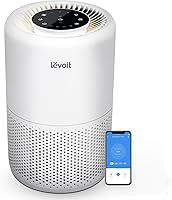
| Levoit Core 300-P | 8.6 | 222 sq ft 4.8 times per hour; 1,073 sq ft once per hour | Bedrooms and smaller rooms |
| Shark NeverChange HP152 | 8.4 | Up to 650 sq ft in 1 hour | Compact rooms and long-lasting filtration |
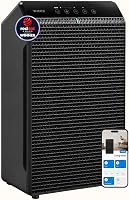
| Winix 5520 | 8.3 | 941 sq ft in 30 minutes; 1,882 sq ft in 1 hour | Auto mode and odor-control carbon filter |
| Coway Airmega Mighty2 | 8.2 | 900 sq ft in 30 minutes; 1,800 sq ft in 60 minutes | Smart mode and washable pre-filter |
These numbers are not directly interchangeable. A room may be described as covered with one air change per hour or several, and the faster cleaning rate is often more useful when you want particles removed more quickly.
What size air purifier do you need for your home?
Choose coverage based on the room where the purifier will run, not the total square footage of your house. For open plans, use the combined area only if the maker's coverage conditions match that space.
Measure the room's length and width, then multiply them to estimate floor area. Check the purifier's stated coverage and air-change rate for a comparable room size.
Be careful with large coverage numbers that don't state how quickly the unit cleans the air. A model rated for a large space at one air change per hour may run at a lower fan speed than a rating based on several changes per hour.
For rooms with high ceilings, open doorways or frequent airflow between spaces, square footage alone may not capture the full air volume. A room-size air purifier guide can help you compare the numbers.
Which filter type matches your concern?
A particle filter helps capture airborne particles, while activated carbon is the feature to look for when odors or some gases matter. Many households need both kinds of filtration.
Common particle concerns include pollen, dust, smoke particles and pet dander. A HEPA or HEPA-grade filter can target particles, but check the exact filter claim and conditions for the model.
Carbon filters vary in amount and design, so an air purifier with carbon won't necessarily remove every odor. For cooking, smoke or pet smells, check what the maker says the carbon filter is designed to reduce.
A purifier can only filter air that reaches it. It won't remove moisture from a damp room or stop new particles entering from outside.
Should you choose a smart or manual air purifier?
A smart or automatic mode can adjust fan speed based on a sensor, while a manual model lets you set the speed yourself. Choose the control style you'll use consistently.
Sensors can help a purifier respond when particle levels rise, but they do not identify every pollutant or show that air is free of all pollutants. A visible air-quality display is a useful cue, not a complete indoor-air assessment.
If you prefer a set speed or want fewer controls, a manual unit can be easier to operate. Check whether the model has a timer, dimmable display or a sleep setting if those details matter where it will sit.
How important are noise and placement?
Noise matters because a purifier works best when you can keep it running at a useful speed. Place it where air can move through its intake and outlet without obstruction.
A unit's quietest setting may clean more slowly than its higher settings. If you plan to use it in a bedroom, compare the stated noise level and decide whether the needed fan speed will suit your sleep routine.
Keep the purifier away from curtains, furniture and tight corners if they block airflow. Follow the maker's placement guidance, and keep it where you can reach the controls and filters.
Which air purifier features are useful for common rooms?
Useful features depend on the room and concern: a washable pre-filter can simplify care, while automatic controls can adjust airflow as conditions change. Match those features to the problem instead of paying attention to a long feature list.
No purifier listed here should be treated as a remedy for a building problem. Address the source of dampness, smoke or strong odors where possible, and use filtration to reduce airborne particles as a supporting measure.
For large living spaces and pets
The Levoit Vital 200S-P is designed for larger rooms, with a stated coverage of up to 1,875 sq ft. Its listed CADR values are 250 CFM for smoke, 254 CFM for dust and 289 CFM for pollen.
Levoit describes it as designed for allergy groups and pet households. Those are maker claims, so use the CADR and room-size figures to compare its fit with your space.
Consider where the unit will sit and whether its footprint works in your room.
For a bedroom or smaller room
The Levoit Core 300-P is suited to a smaller room when you want a compact purifier with a sleep setting. Its stated rate is 222 sq ft 4.8 times per hour, and the maker gives a separate 1,073 sq ft figure at one air change per hour.
The Core 300-P uses manual fan-speed control and does not include Auto Mode or smart connectivity. That makes it a straightforward choice if you don't need automatic adjustment.
Check its voltage requirement as well: it is 120V and suitable for use in the United States. Compare more options in our best HEPA air purifiers guide.
For a musty basement or damp room
An air purifier may help capture airborne particles, but it does not dry a basement or remove the source of a musty smell. Look for moisture first, and use a purifier only as part of a broader fix.
The Winix 5520 includes a carbon filter designed to reduce household odors from cooking, pets and smoke. Its washable fine-mesh pre-filter is intended to catch larger airborne particles, and its built-in sensor can adjust fan speed in Auto Mode.
For dampness, you may need a dehumidifier or repair to a leak rather than more filtration. See air purifiers for basements and our guide to air purifiers for musty smells for room-specific considerations.
For low-maintenance use
The Coway Airmega Mighty2 has a washable pre-filter and a digital display that shows remaining life for both the pre-filter and its combined HEPA and carbon filter. Coway says its Smart Mode adjusts airflow based on real-time air quality.
Coway gives coverage as 900 sq ft in 30 minutes or 1,800 sq ft in 60 minutes. Use the 30-minute figure when comparing a faster cleaning rate for a room of that size.
Its automatic mode may be convenient, but it adds a sensor-based control style that not every buyer needs. Check the location of the display and controls to make sure they're easy to reach.
For odors and a compact footprint
The Shark NeverChange HP152 is a compact option with stated coverage up to 650 sq ft in one hour. Its CleanSense IQ display shows particle readings from PM 1.0 to 10, with “Clean Air 100%” meaning those readings are at or below the sensor's detection limit.
Shark says its odor-neutralizer cartridge releases a scent, so consider that feature if you prefer unscented air. Its stated coverage is based on one air change per hour, which may be slower than you want for a larger room.
The unit's washable debris screen can be vacuumed, wiped or rinsed, while its NeverChange HEPA filter is designed for long-lasting use. Follow Shark's care directions for each part.
What should you check before you buy an air purifier?
Before buying, confirm room coverage at the cleaning rate you want, then check replacement-filter availability and the unit's operating details. The best fit is the one you'll place and maintain as intended.
Use this checklist to compare models:
- Room area and air changes: Compare coverage at a stated rate, not just the largest number.
- Main concern: Particle capture and odor reduction call for different filter features.
- Filter upkeep: Check which parts are washable and which need replacement.
- Noise: Compare the quiet setting with the fan speed you expect to use.
- Controls: Decide whether you want manual speeds, a timer, a sensor or app access.
- Placement: Leave room around the intake and outlet, and check the unit's dimensions.
- Ongoing use: Consider how often you'll need to clean a pre-filter or replace a main filter.
Filter replacement costs and schedules vary by model and use. Check the maker's instructions for the exact filter, and avoid assuming that a washable pre-filter means the main filter is washable.
How do you keep an air purifier working well?
Keep an air purifier working well by cleaning washable pre-filters and replacing other filters according to the maker's schedule. A clogged or poorly fitted filter can reduce airflow.
Check the intake for dust or pet hair and keep the outlet clear. If the unit has an indicator, use it as a maintenance prompt, then follow the manual for the specific filter and reset steps.
Don't wash a HEPA or other main filter unless the maker says it's washable. Our guide explains whether you can wash a HEPA filter.
A purifier's sensor can also need care. Keep sensor openings free of dust and follow the maker's cleaning directions if readings seem unusual.
Which air purifier should you choose?
Pick the Levoit Vital 200S-P (8.9) for a larger room and pet-related particle concerns, the Core 300-P (8.6) for a bedroom with manual controls, or the Shark NeverChange HP152 (8.4) for compact, long-lasting filtration. Choose the Winix 5520 (8.3) for its odor-control carbon filter or the Coway Airmega Mighty2 (8.2) for smart operation and a washable pre-filter.
Room size and cleaning rate should decide the model before extra features do. If a musty smell is your main concern, start by addressing moisture and then use our musty-smell air purifier guide to compare next steps.
Frequently asked questions
What is the best air purifier for home use?
The best air purifier for home use is the one sized for the room where you need cleaner air and suited to the particles or odors you want to reduce. Compare clean-air delivery rates, filter type, operating noise and replacement needs.
A large coverage claim at a slow cleaning rate may not fit your goal.
How do I know what size air purifier I need?
Measure the room's floor area and compare it with the purifier's coverage at the air-change rate you want. Check the maker's stated room size and cleaning rate together, because a larger area may mean fewer air changes per hour.
For open layouts, consider the space the unit can actually serve.
Do air purifiers remove musty smells?
An air purifier may reduce some airborne odor compounds if it has an effective activated carbon filter, but it won't fix the dampness or mold source behind a musty smell. Find and address moisture first, then use filtration as a supporting step.
See our guide to air purifiers for musty smells.
Is a HEPA filter enough for smoke and odors?
A HEPA filter is designed to capture airborne particles, while odors and some gases call for an activated carbon or other sorbent filter. Smoke includes particles and odor compounds, so check that the purifier addresses both.
Filter performance depends on the specific model and how you use it.
Should I run an air purifier all day?
Running an air purifier continuously can keep air moving through its filter, but the right schedule depends on your needs, room conditions and tolerance for noise and power use. Use the maker's guidance, choose a speed you can live with, and keep doors and windows in mind.