Air Purifiers for Basements: What Works in Damp Spaces
An air purifier for a basement can capture airborne particles, but it won't dry the room or stop a leak. Fix moisture first, then size a purifier to the area and the particles or odors you want to address.
On this page (8 sections)
- Will an air purifier work in a damp basement?
- Should you fix moisture before running a purifier?
- How do you choose an air purifier for a basement?
- Which filters help with basement dust and odors?
- Where should you place a purifier in a basement?
- How should you run and care for a basement purifier?
- What mistakes should you avoid with a basement air purifier?
- Which air purifier should you choose for a basement?
An air purifier for a basement can capture airborne particles, but it won't dry the room or stop a leak. Fix moisture first, then choose a purifier sized for the space and the particles or odors you want to reduce.
Basements can be challenging because dampness, limited airflow, and musty odors may have different causes. A purifier filters the air that reaches it; it doesn't dry wet walls, remove standing water, or repair a plumbing problem.
Will an air purifier work in a damp basement?
Yes, a purifier can help with airborne particles, but it cannot solve dampness itself. Particle filters capture particles that pass through the unit, and carbon filtration may help with some odors.
Check for leaks, water seepage, condensation, and blocked drainage. If humidity stays high, consider a dehumidifier and use a meter to track conditions.
If odor is your main concern, see whether an air purifier can get rid of a musty smell. For a room-by-room overview, start with how to pick the best air purifier for your home.
What can a basement air purifier capture?
A particle filter can capture airborne dust, pollen, smoke, or pet dander when those particles reach the unit. Carbon filtration may help with some odors, but it does not remove moisture.
Keep the intake and outlet clear so air can move through the purifier. Avoid placing it against a wall or behind stored items.
What can't a basement air purifier fix?
A purifier can't dry a wet foundation, stop water from entering, or remove mold growing on building materials. Those problems call for finding the moisture source and choosing appropriate repair or cleanup.
Don't use a purifier as a substitute for cleaning visible growth. If mold is extensive, returns, or follows a leak, ask a qualified professional about safe cleanup and repairs.
Should you fix moisture before running a purifier?
Yes, address the source of moisture before relying on air cleaning. Check for plumbing leaks, water entering through walls or floors, condensation on cold surfaces, and water collecting near the foundation.
The U.S. Environmental Protection Agency recommends keeping indoor humidity below 60%, ideally between 30% and 50%, to help control moisture and mold growth.
See the EPA's mold and moisture guidance.
A humidity meter can show whether conditions are changing. The Govee H5075 Hygrometer measures temperature and humidity, provides 20-day app graphs, and can send alerts when readings move outside a preset range.
Place the meter in the area you want to monitor, away from direct moisture and heat. Its Bluetooth connection supports up to 164 ft in open, unobstructed conditions, though walls and the basement layout can limit readings.
If humidity remains high, compare an air purifier with a dehumidifier for a damp room. A purifier filters air; a dehumidifier removes moisture from it.
How do you choose an air purifier for a basement?
Match the unit's stated coverage and cleaning rate to the area and layout. For an open room, compare both the square-foot coverage and how quickly the unit cleans that area; a divided basement may need more than one unit.
Coverage figures can describe different cleaning schedules. Measure the usable area, note high ceilings and closed doors, and compare the cleaning rate you want with the unit's stated rate.
For more help with capacity, use our guide to choosing an air purifier size. Check whether the filter suits your concern, then consider controls, noise preferences, and how often you'll need to maintain it.
Which air purifier fits a large basement?
The Levoit Core 600S-P suits a large open area where high stated coverage is the priority. It covers 2,933 sq ft once per hour or 606 sq ft every 12.5 minutes, and its three-stage system is described as filtering 99.97% of airborne particles from 0.1 to 0.3 microns.
Levoit offers replacement filters for this model focused on smoke, toxins, or pet-related concerns. Choose a compatible filter for the issue you want to address.
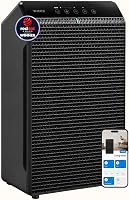
The Winix AT40 suits a defined basement zone if you want an air-quality display and app controls. It is AHAM verified at 410 sq ft and also has stated coverage up to 1,968 sq ft in one hour, a True HEPA filter, and a carbon filter.
Its coverage varies with cleaning time, so compare the rate you want with the size of the space. Wi-Fi control and the display are useful if you want to check readings and settings without relying only on manual adjustments.
The Medify MA-50 suits shoppers comparing high airflow and multiple fan speeds. It has a CADR of 598, cleans up to 2,640 sq ft in one hour, and offers four fan speeds.
Medify says the replacement filter lasts 2,500 hours, or about 3 to 4 months. Consider that replacement schedule if you expect to run the purifier for long periods.
Skip a large purifier if the basement is small and its capacity or footprint is more than you need. Also skip any model if its filter type, cleaning rate, or replacement routine doesn't fit your needs.
Which filters help with basement dust and odors?
Choose filtration based on what you want to reduce. Particle filtration is the main feature to compare for airborne dust, pollen, smoke, or pet dander; carbon filtration may help with some odors.
For mustiness, address dampness and the odor source first. A purifier may help with some airborne particles, but it won't remove mold from surfaces or prevent regrowth.
For mold-related questions, read our guide to air purifiers for mold spores and musty rooms. Pick a unit for the air concerns it can address, not as a substitute for moisture control or cleanup.
Where should you place a purifier in a basement?
Set the unit on a dry, stable surface with clear space around its intake and outlet. Place it near the area you want to address while keeping it away from walls, curtains, stored items, and water.
Don't put an electrical appliance where leaks or splashes could reach it. Follow the unit's instructions for clearance, cleaning, and filter changes.
A purifier in one room may not clean air well in other rooms with closed doors. Leave doors open when practical, or consider separate units for rooms that need their own air cleaning.
How should you run and care for a basement purifier?
Run the purifier at a setting that fits the room and your comfort, and keep its filters maintained. Higher fan speeds move more air but may be louder; lower settings may take longer to clean the space.
Check the filter regularly, especially if the basement is dusty, and replace it according to the manufacturer's schedule. Keep the unit's air openings clear so airflow isn't blocked.
An auto mode can adjust fan speed based on a unit's sensor, but a sensor does not monitor every corner of a basement. See whether you should leave an air purifier on all the time for guidance on run time and upkeep.
What mistakes should you avoid with a basement air purifier?
Don't expect a purifier to fix moisture, mold on surfaces, or a leak. Address those issues first, then use air filtration for the particles that pass through the unit.
Avoid choosing by the largest coverage number alone. Compare the cleaning rate, room layout, filter type, and placement; a purifier cannot circulate air through closed rooms.
Don't block the intake or outlet, set the unit where it could get wet, or ignore filter care. If musty odor persists, look for an ongoing moisture source instead of turning the fan higher to mask it.
Which air purifier should you choose for a basement?
Choose the Levoit Core 600S-P for a large open space, the Winix AT40 for a basement zone where app controls and an air-quality display matter, or the Medify MA-50 when its CADR and fan speeds fit your needs. Choose the Govee H5075 when tracking humidity is the priority.
Start with moisture control if the basement is damp, then match purifier coverage and cleaning rate to the space. For a focused comparison, see the best air purifiers for basements.
Frequently asked questions
Will an air purifier help with a damp basement?
An air purifier can capture airborne particles such as dust, pollen, and some smoke, depending on its filter and use. It won't remove moisture, stop a leak, or clean mold from surfaces.
Fix water entry and manage humidity first.
Then use a purifier as one part of improving the room's air.
Should I use an air purifier or a dehumidifier in a basement?
Use a dehumidifier when excess moisture is the main problem and an air purifier when airborne particles are the concern. A damp basement may need both, but neither fixes a leak or replaces safe mold cleanup.
Track humidity and address the moisture source before choosing which device to run.
What size air purifier do I need for a basement?
Choose a purifier whose stated coverage and cleaning rate fit the basement area and the air-cleaning pace you want. Open layouts, high ceilings, and divided rooms can affect how well one unit serves the space.
Compare coverage and cleaning time, then place the unit where air can move around it.
Can an air purifier remove a musty basement smell?
A purifier with carbon filtration may help reduce some odors, but odor control depends on the filter and the source. Persistent mustiness can point to moisture, poor drainage, or mold growth.
Find and fix the cause.
Don't rely on a purifier to mask a continuing problem.