Should You Leave an Air Purifier On All the Time?
Usually, yes: leave an air purifier running continuously if you want steady particle removal and the manual allows it. Use a quieter speed or Auto mode when needed, and keep up with filter care.
On this page (9 sections)
- Should I leave my air purifier on all the time?
- Does an air purifier clean a room faster if you leave it on?
- Can you run an air purifier overnight?
- Should you use Auto mode or a fixed fan speed?
- Does continuous use wear out the filter faster?
- Does leaving an air purifier on use much electricity?
- When should you turn an air purifier off?
- Should I leave my air purifier on all the time?
- About this guide
Usually, yes: leave an air purifier running continuously if you want steady particle removal and the manual allows it. Choose a lower speed or Auto mode to manage noise and power use, and follow the filter care instructions.
A purifier only cleans air that passes through it. Turning it off stops that ongoing airflow, so particles may build up again from cooking, pets, open doors, or other indoor sources.
Should I leave my air purifier on all the time?
Leave it on when you want ongoing filtration and the manual permits continuous use. A purifier can capture airborne particles only while its fan draws room air through the filter.
Continuous operation may make sense in a room where people spend much of the day, such as a bedroom or living room. Run the unit at a speed that fits the room and your tolerance for sound.
Keep the purifier's intake and outlet unobstructed. Follow the manual's placement and maintenance guidance, and switch the unit off before cleaning it.
Does an air purifier clean a room faster if you leave it on?
Running the purifier longer gives it more time to move room air through its filters. How quickly it changes the air depends on the unit, room size, fan speed, and how much new pollution enters.
A purifier sized for a smaller space may need more time in a large or open room. Check the rated room coverage and the conditions behind that figure before choosing a location.
Keep windows and doors in mind, too. If outdoor smoke or cooking odors enter, the purifier may need to keep working as air moves through the room.
For help matching room size to a unit, see what size air purifier you need. If you are checking whether yours is doing its job, read how to tell if an air purifier is working.
Can you run an air purifier overnight?
You can run many air purifiers overnight if the manual allows it and the sound doesn't disturb you. A sleep mode or lower fan speed can reduce noise and dim or switch off lights on models with those features.
Place the unit on a stable surface with space around its air openings. Don't cover it with bedding or set it where it could be knocked over.
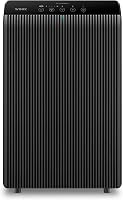
The Winix 5510 has a sleep mode that activates when the room is dark, and its slowest-speed noise is 23.5 dB. That may suit someone who wants continuous operation with an automatic night setting.
The DREO DR-HAP008 includes Sleep mode, which turns off the display lights. It also offers Auto, Turbo, and Normal modes, so you can choose based on the room and the sound you can accept.
If a purifier's fan or lights keep you awake, try a quieter setting or move it farther from the bed while keeping the airflow clear. If that still doesn't work, run it during the hours when the room is occupied.
Should you use Auto mode or a fixed fan speed?
Use Auto mode if your purifier has it and you want it to adjust fan speed as air quality changes. Choose a fixed speed if you prefer to control the airflow yourself or your model's sensor doesn't suit your needs.
Auto mode can raise the fan speed when the unit detects poorer air and lower it when conditions improve. Sensor behavior and controls vary, so read your manual before relying on it.
The Coway Airmega AP-1512HH has an Auto mode that monitors air quality and adjusts fan speed. Its air quality indicator uses a colored LED, which you can turn off for sleep.
The Levoit Vital 200S-P is designed for spaces up to 1,875 sq ft and has an additional U-shaped air inlet alongside a traditional inlet. Match its size to the room and the coverage conditions that matter to you.
For broader selection advice, see how to pick the best air purifier for your home.
Does continuous use wear out the filter faster?
A purifier that runs more hours moves more air through its filter, so keep to the cleaning and replacement schedule for your model. Heavy use, dust, smoke, pets, and other indoor particles can affect how quickly a filter needs attention.
Don't wash a HEPA filter unless the manufacturer says it is washable. Some purifiers have a washable pre-filter, while the main filter may need replacement.
The Winix 5510 has a washable fine mesh pre-filter, which catches larger airborne particles. Clean it as its manual directs, and follow the same manual for the True HEPA filter.
See whether you can wash a HEPA filter for the difference between washable pre-filters and HEPA filters. If your purifier smells unusual, why an air purifier may smell covers common causes and fixes.
Does leaving an air purifier on use much electricity?
Electricity use depends on the model, speed, and hours it runs. A lower setting may draw less power than full speed, but check the unit's energy information to estimate its use.
Auto mode may reduce fan speed when the unit senses cleaner air. That can help manage everyday operation, but it doesn't guarantee a particular bill or energy use.
The DREO DR-HAP008 uses approximately 125 kWh annually, according to its stated energy information. Actual consumption can vary with settings and use.
For a closer look at operating costs, read how much electricity an air purifier uses.
When should you turn an air purifier off?
Turn it off for cleaning, filter changes, or any maintenance the manual requires. You may also switch it off when the room is empty if you prefer to limit operating hours.
Unplug the unit before cleaning if its instructions say to do so. Keep water away from electrical parts, and don't run a purifier with a damaged cord or a blocked intake.
A purifier does not replace source control or ventilation. Fixing a persistent moisture problem, removing smoke at its source, or airing out a room when outdoor conditions allow can matter as much as filtration.
Should I leave my air purifier on all the time?
For steady filtration, leave it on when the room is occupied or you want ongoing air cleaning, provided the manual allows continuous use. Use Auto or a lower speed if you want to manage noise and energy use, and keep the filters in good condition.
Choose the Winix 5510 for a dark-room sleep mode, the DREO DR-HAP008 for Sleep mode with display lights off, or the Coway Airmega AP-1512HH for Auto mode and a switchable air quality light. Compare more options in our air purifier guide.
About this guide
This guide covers leaving an air purifier on all the time, including continuous use, overnight settings, and filter care.
Frequently asked questions
Should I leave my air purifier on all day?
Usually, yes, if you want ongoing air cleaning and the manual permits continuous operation. Run it at a speed you can live with, keep the intake and outlet clear, and check or replace filters as directed.
Turn it off for cleaning or maintenance, and follow any safety instructions in the manual.
Is it safe to run an air purifier while I sleep?
Many air purifiers have a sleep or low-speed mode for overnight use, but check your model's manual and place it on a stable, clear surface. If indicator lights or fan noise bother you, use a sleep setting if available.
Keep the unit away from water and avoid blocking its airflow.
Does running an air purifier all the time use a lot of electricity?
Electricity use depends on the purifier, fan speed, and hours of operation. A lower speed or Auto mode may use less power than running at full speed, though the result varies by model.
For a more specific estimate, see the unit's energy information and our guide to air purifier electricity use.
Should I turn off my air purifier when I leave home?
You can turn it off when you leave if you prefer, but continuous operation keeps filtering while you're away. Consider the room, your reason for using it, energy use, and the manufacturer's instructions.
Auto mode may suit you if the unit has it and you want it to adjust fan speed as air conditions change.