How Much Electricity Does an Air Purifier Use?
Most air purifiers use about 10 to 100 watts, depending on the model and fan speed. Check the wattage on the unit or in its manual, then multiply by hours of use and your electricity rate to estimate the cost.
On this page (7 sections)
- How much electricity does an air purifier use per hour?
- How do you estimate the cost to run an air purifier?
- What changes an air purifier’s electricity use?
- How much electricity do these air purifiers use?
- Can you leave an air purifier on all the time?
- How can you lower an air purifier’s electricity use?
- How much electricity should you expect to use?
Most air purifiers use about 10 to 100 watts, depending on the model and fan speed. Multiply watts by hours of use and divide by 1,000 to estimate electricity use in kilowatt-hours (kWh).
For example, a 50-watt purifier running for 24 hours uses 1.2 kWh. Multiply that by your electricity price per kWh to estimate the daily cost.
How much electricity does an air purifier use per hour?
An air purifier’s hourly electricity use is its wattage divided by 1,000. A 50-watt unit uses 0.05 kWh in an hour at that power draw.
Check the label, manual, or manufacturer’s specifications for wattage. Some units list a maximum wattage, which may reflect a higher fan setting, and actual use can change with the selected mode.
Use this estimate:
Watts × hours ÷ 1,000 = kilowatt-hours
A purifier using 35 watts for 8 hours uses 0.28 kWh. This estimates energy use, not cost.
How do you estimate the cost to run an air purifier?
Multiply the energy use in kWh by your electricity rate. Your utility bill usually shows the rate per kWh, though fees and taxes can affect the final bill.
A 50-watt purifier running 8 hours uses 0.4 kWh: 50 × 8 ÷ 1,000. At an example rate of 20 cents per kWh, that would cost about 8 cents for those 8 hours.
Your result depends on the rate and the purifier’s actual power draw. A plug-in energy monitor can measure consumption over time for a more precise estimate.
What changes an air purifier’s electricity use?
Wattage, fan speed, and run time have the biggest effect on energy use. A unit’s actual draw depends on its model and selected setting.
Does fan speed change how much electricity it uses?
Yes, the fan setting can change a unit’s power draw. The highest setting may use more electricity than a low or sleep setting, but the difference depends on the model.
Choose a setting that fits your room and needs. If you want it to run overnight, check whether the unit has a quieter mode and what its manual says about operation.
Does room size affect energy use?
Room size can affect which purifier and fan setting make sense. A small unit may need to run at a higher speed or longer to circulate air in a larger room, while an appropriately sized unit may offer more setting choices.
Match the purifier to the room using its coverage guidance, and consider what size air purifier you need for your room before choosing a model.
How much electricity do these air purifiers use?
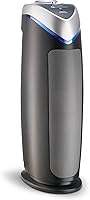
The Levoit Core 300-P has a 56-watt motor. Wattage alone doesn't tell you the exact monthly cost, because fan setting and hours of use matter too.
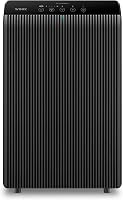
The Shark NeverChange HP152 has Eco mode and controls that display fan speed and filter life. Its power consumption isn't specified here, so check its manual for a wattage figure before estimating cost.
The Medify MA-25 has 3 fan speeds and a sleep mode. Its stated operating voltage is 110 volts, but voltage alone doesn't show how much electricity it uses.
The Coway Airmega AP-1512HH has Auto and Eco modes. Its Auto mode adjusts the fan based on the air-quality monitor, which can change how the unit runs over time.
Can you leave an air purifier on all the time?
You can run an air purifier for long periods if its manual allows it, but longer operation generally uses more electricity. Estimate the cost using the wattage and expected hours of operation.
Some people use a lower setting for continuous operation and a higher setting when they want faster circulation. Follow the manufacturer's instructions, keep air intakes and outlets clear, and clean or replace filters as directed.
For more on run time, see whether you should leave an air purifier on all the time. If you're unsure whether a unit is operating as expected, read how to tell if an air purifier is working.
How can you lower an air purifier’s electricity use?
Choose a purifier sized for the room, use the lowest setting that meets your needs, and avoid running it longer than necessary. Maintain the filter according to the manual, since a clogged filter can affect airflow.
A washable pre-filter may reduce how often that part needs replacement, but it doesn't mean the main filter is washable. Check your model's instructions before rinsing any part; our guide to washing a HEPA filter explains the difference.
An air purifier with UV light may have extra components that affect energy use, depending on the model. Compare its features and instructions with our guide to air purifiers with UV light before choosing one.
How much electricity should you expect to use?
Estimate your air purifier’s electricity use from its wattage and planned hours of operation. Divide total watt-hours by 1,000, then multiply the kWh by your electricity rate.
Choose a model with a suitable room size and useful fan settings. The Levoit has a stated motor wattage, while the Shark, Medify, and Coway have modes or speeds to consider when planning operation.
For model-selection help, see how to pick the best air purifier for your home. Use your bill’s kWh rate and the unit’s manual to make the estimate fit your household.
Frequently asked questions
How much electricity does an air purifier use per day?
Daily use depends on the purifier's wattage, fan setting, and hours running. For example, a 50-watt unit running 24 hours uses 1.2 kilowatt-hours per day: 50 watts × 24 hours ÷ 1,000.
Multiply that energy use by your utility's price per kilowatt-hour to estimate the daily cost.
Is it expensive to run an air purifier all day?
It depends on the unit's wattage and your electricity rate. A lower fan setting may use less power than a higher one, but the exact draw varies by model.
Check the manual or measure the unit with a plug-in energy monitor, then calculate the cost from your rate.
Do air purifiers use a lot of electricity?
Many air purifiers draw far less power than large household appliances, but usage varies by model and setting. Compare the purifier's wattage with how many hours you plan to run it.
A small room unit on a low setting can use less energy than a larger unit running at full speed.
Does leaving an air purifier on use more electricity?
Yes. Longer run time means more energy use, though a lower fan setting may reduce the rate of use.
If you need continuous filtration, compare the expected cost of running the unit with your budget and room needs; the manual can clarify available modes and settings.