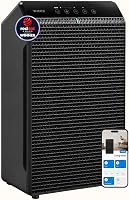
Can an Air Purifier Clear Cooking and Kitchen Smells?
An air purifier can reduce some kitchen smells, especially when it has an activated carbon filter, but it won't replace a range hood or open window. Use ventilation and remove the odor source first.
On this page (7 sections)
- Can an air purifier for kitchen smells remove cooking odors?
- What should you do before turning on a purifier?
- Which air purifier features matter for kitchen smells?
- Which air purifier might fit a kitchen or nearby room?
- How can you reduce cooking smells faster?
- Why can a kitchen smell persist after cooking?
- Is an air purifier enough for kitchen odors?
An air purifier can reduce some kitchen smells, especially when it has an activated carbon filter, but it won't replace a range hood or open window. Ventilate and remove the odor source first, then use the purifier to help with lingering airborne odors and cooking particles.
A purifier works best as part of a simple routine: capture cooking fumes at the source, clean grease and spills, and keep the filter in good condition. Smoke and particles are different from odor gases, so the filter type matters.
Can an air purifier for kitchen smells remove cooking odors?
An air purifier for kitchen smells may reduce some odors if it includes activated carbon. A HEPA filter is designed to capture particles such as smoke, while carbon can adsorb some gases and odor compounds.
No purifier clears every smell equally well. Strong frying, burnt food, fish, or a lingering trash odor can outpace a small or poorly placed unit, especially when the source is still present.
Use the range hood while cooking if you have one, and choose an exhaust setting that vents outdoors when possible. The U.S.
Environmental Protection Agency recommends using kitchen exhaust fans that vent outdoors to reduce indoor pollutants.
What should you do before turning on a purifier?
Control the smell at its source and ventilate the room first. Turn on the hood, open a window when conditions allow, and clean up grease or food residue after cooking.
A purifier should sit where air can move around it, away from the stove's heat, steam, splashes, and greasy airflow. Follow the unit's placement and cleaning instructions.
Clean the range hood's grease filter on its schedule, empty food waste, and wipe nearby surfaces. An air cleaner can't remove odor from a dirty bin or grease coating a cabinet.
For odors that linger after routine cooking, look for the source before adding equipment. Our guide to choosing an air purifier for your home explains how room size and filter needs shape the choice.
Does a HEPA filter remove kitchen odors?
A HEPA filter helps capture airborne particles, but it isn't the main odor-control layer. Cooking smoke and fine particles can be caught by particle filtration, while activated carbon is used to reduce some gases and smells.
A purifier that has both particle filtration and carbon may suit a kitchen better than a particle-only model. Carbon amount and filter design vary, so don't assume every purifier with a carbon layer will handle strong odors the same way.
Which air purifier features matter for kitchen smells?
Prioritize an odor-reducing carbon filter, airflow suited to your space, and practical filter maintenance. A purifier in an adjoining open-plan room may need to handle more air than one placed in a small enclosed kitchen.
Check whether the unit offers manual fan speeds or an automatic mode. Cooking odors can rise quickly, and a higher fan setting may move more air during and after meal preparation.
Consider where the purifier can sit without getting greasy or wet. A tabletop unit may be easier to position in some kitchens, while a larger unit may suit a connected living area.
Should you choose an air purifier with a carbon filter?
Yes, if reducing cooking odors is a goal, look for a model that specifically includes a carbon filter. Carbon can help with odors and some gases, while a HEPA filter handles particles.
Carbon filters need care and eventual replacement. Follow the brand's filter instructions, since a saturated or dirty filter may perform less well.
Which air purifier might fit a kitchen or nearby room?
The Winix 5510 has the clearest stated cooking-odor feature among these models, while the others offer different room coverage, filtration, and controls. Choose based on your space and the features you want.
The Winix 5510 includes a carbon filter described for household odors from cooking, pets, and smoke. It has an air quality indicator and is rated for 392 sq ft by AHAM.
The Blueair Blue Pure 311i Max uses HEPASilent dual filtration, with app control and sensors that adjust fan speed. Its stated coverage is up to 2,107 sq ft in 1 hour, but no dedicated carbon filter is specified here.
The Winix AT40 includes a carbon filter, a True HEPA filter, and an air quality display. Its AHAM-verified room size is 410 sq ft.
The Medify MA-25 has 3 fan speeds and a touch panel. Medify describes its H13 HEPA filtration as targeting odors and VOCs as well as particles, but no carbon filter is specified here.
How can you reduce cooking smells faster?
Use source ventilation during cooking, then keep air moving after the heat is off. Run the hood as directed and leave it on for a while after cooking if its instructions allow.
Keep lids on pans when practical, avoid letting food burn, and clean splatters before they harden. If you fry often, use the hood and clean its filters regularly.
Run the purifier on a higher setting during odor-heavy cooking if the brand's instructions permit. Lower the fan afterward if noise is a concern, while remembering that less airflow may take longer to clear the room.
For smoke from cigarettes or other sources, see our guide to air purifiers for cigarette smoke. For pet-related odors, compare the advice in air purifiers for cat litter smell.
Why can a kitchen smell persist after cooking?
Persistent smells usually call for source checks, filter maintenance, and better ventilation. Check the stove, oven, hood filter, trash, drain, and nearby fabrics or surfaces that can hold odors.
If the odor is musty rather than food-related, moisture may be involved. An air cleaner can help with some airborne particles, but it won't fix the dampness; see whether an air purifier can help with a musty smell.
A purifier also needs clean filters and unobstructed airflow. Check its manual for how often to clean or replace each filter, and don't wash a filter unless the brand says it is washable.
Is an air purifier enough for kitchen odors?
Use an air purifier as a supplement to ventilation and cleaning, not as the only odor control. Carbon filtration may help with lingering smells, while particle filtration can capture airborne smoke and other particles.
Pick the Winix 5510 if a stated cooking-odor carbon filter is your priority. Consider the AT40 for carbon filtration with an air quality display, or the MA-25 or Blueair 311i Max if their features fit your space and particle-cleaning needs.
For broader advice on choosing between brands and features, read our air purifier brand and model guide. Use the hood, clean the source, and let the purifier handle what remains in the air.
Frequently asked questions
Can an air purifier remove cooking smells?
It can reduce some cooking smells when it has an odor-absorbing filter, such as activated carbon, and is sized for the room. Results depend on the odor, filter condition, airflow, and how long the source remains.
Ventilate while cooking and clean spills or residue so the purifier has less odor to handle.
What kind of air purifier is best for kitchen odors?
Look for a purifier with an activated carbon filter for odors and enough airflow for the kitchen or adjoining space. A HEPA filter targets airborne particles such as smoke, while carbon is the part intended to reduce gases and odors.
Check the filter replacement instructions and keep a range hood or other ventilation in use.
Should I run an air purifier while cooking?
You can run one while cooking, but keep it clear of splashes, grease, heat, and steam, and follow its placement instructions. Use a range hood vented outdoors if available, or open a window when practical.
The purifier can help with lingering airborne particles and odors after you reduce the source.
Why does my kitchen still smell with an air purifier?
The smell may be coming from residue, a full or aging carbon filter, or a source the purifier cannot capture well. Clean the stove, hood filters, bins, and nearby surfaces, then check the purifier's filter guidance.
For a persistent odor, find and remove the source and improve ventilation.