Shark NeverChange Air Purifier Review: Worth It? (October 2026)
This Shark NeverChange air purifier review finds the HP152 best for bedrooms and home offices where you want a live particle display and a washable debris screen. Its stated 650-square-foot coverage is based on one air change per hour, so match the cleaning rate to your room.
On this page (7 sections)
- Shark NeverChange air purifier review: who should consider the HP152?
- What does the HP152’s 650-square-foot coverage mean?
- How should you read the CleanSense IQ display?
- What does the HP152 odor cartridge do?
- How should you set up and care for the HP152?
- What common mistakes should you avoid?
- Which air purifier should you choose?
The Shark NeverChange air purifier review points to the HP152 for bedrooms and home offices where a live particle display and a washable debris screen matter. Its stated coverage is up to 650 square feet at one air change per hour, and the odor cartridge releases a scent.
The HP152’s main trade-offs are that coverage basis, the fragranced cartridge and a display that reports a limited particle range. If you want app control, published CADR figures or a different approach to odor filtration, compare the alternatives below.
Shark NeverChange air purifier review: who should consider the HP152?
The HP152 suits you if you want to see particle readings change and prefer a washable screen for larger debris. Its compact size, dimmable lights and Eco mode may also suit a room where you plan to run a purifier regularly.
It’s a less suitable choice if your main priority is app control, a carbon filter or a room-coverage figure tied to faster air changes. In those cases, compare the Winix 5510 or Levoit Vital 200S-P before deciding.
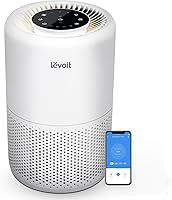
Levoit Vital 200S-P: Best for allergy-focused rooms

- AHAM Verified
- Smoke CADR 250 CFM
- Dust CADR 254 CFM
- Pollen CADR 289 CFM
The Vital 200S-P suits shoppers who want stated CADR figures and a large-room model. Levoit describes it as designed for allergy groups and offers replacement filters for different concerns.
Pros
- AHAM Verified with stated CADR figures
- U-shaped intake alongside a traditional air inlet
- Filter choices target pet allergens, smoke or toxins
Cons
- Larger footprint than the HP152
- Replacement filter choice depends on the concern you want to address
Levoit gives separate smoke, dust and pollen CADR figures for the Vital 200S-P. Its U-shaped inlet sits alongside a traditional air inlet, and the model is designed for allergy groups.
Coway Airmega AP-1512HH: Best for simple auto operation

- Four-stage filtration
- Washable pre-filter
- Auto and Eco modes
- Air-quality indicator
The Coway AP-1512HH pairs a washable pre-filter with Auto and Eco modes. Its stated coverage is for 60 minutes, so compare cleaning time as well as square footage.
Pros
- Washable pre-filter
- Auto and Eco modes
- Air-quality indicator can be turned off
Cons
- Coverage figure is tied to a 60-minute cleaning period
- Wider than the HP152
The Coway Airmega AP-1512HH has a washable pre-filter, Auto and Eco modes, and an air-quality indicator whose light can be turned off. Its stated coverage uses a 60-minute cleaning period.
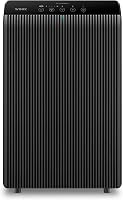
Winix 5510: Best for app-connected rooms

- AHAM Verified at 392 sq ft
- True HEPA
- Carbon odor filter
- Smart App compatibility
Consider the Winix 5510 if app control and a carbon filter for household odors are priorities. Winix gives an AHAM-verified room size and separate larger coverage figures tied to different cleaning intervals.
Pros
- AHAM Verified at 392 sq ft
- Carbon filter designed to reduce household odors and VOCs
- App compatibility and automatic fan adjustment
Cons
- Taller and heavier than the HP152
- Coverage figures vary with cleaning time
The Winix 5510 has Smart App compatibility, an air-quality indicator and automatic fan adjustment. Its published room figures use different cleaning intervals, so check the interval that best matches your room and routine.
Shark NeverChange HP152: Best for visible air feedback

- CleanSense IQ display
- NanoSeal filtration
- Up to 650 sq ft at 1 air change per hour
- Washable Debris Defense filter
The HP152 combines a live particle reading, long-lasting filtration and a washable screen for larger debris. Its coverage claim uses one air change per hour, and its odor cartridge adds a scent.
Pros
- CleanSense IQ shows particle concentration changes
- Shark says its NanoSeal captures 99.98% of particles at 0.1–0.2 microns under IEST-RP-CC007
- Washable Debris Defense screen can be vacuumed, wiped or rinsed
- Dimmable lights and Eco mode
Cons
- 650 sq ft coverage is based on one air change per hour
- Odor Neutralizer cartridge releases a scent
- Clean Air 100% only means measured particles are at or below the sensor detection limit
Shark says the NanoSeal filter captures 99.98% of particles at 0.1–0.2 microns under IEST-RP-CC007. CleanSense IQ tracks airborne particle concentration, but its Clean Air 100% label means the measured particles are at or below the sensor’s detection limit.
The washable Debris Defense screen catches larger particles such as hair, dust and dander before they build up on the HEPA filter. Shark says you can vacuum, wipe or rinse the screen.
Who should skip the Shark NeverChange air purifier?
Skip the HP152 if you want an app, prefer odor control without added fragrance, or need coverage figures based on a faster cleaning interval. The Winix 5510 offers app compatibility and a carbon filter, while the Levoit Vital 200S-P provides stated CADR figures.
If filter labels are central to your choice, our guide to the best HEPA air purifiers for the home explains what to compare across models. For a brand-level comparison, see Levoit vs Shark air purifiers.
What does the HP152’s 650-square-foot coverage mean?
The HP152 is rated for up to 650 square feet at one air change per hour, based on AHAM AC-1. That means its stated room size is tied to one hourly air change, not to a faster cleaning rate.
Room coverage depends on how much air a purifier moves and how often it can cycle a room’s air. Compare both square footage and cleaning interval; the largest room figure alone may not match how quickly you want to clean the air.
Start with the room where the purifier will run. If you want more frequent air changes, choose a room target below the maximum and consider whether the fan speed and noise will fit your daily routine.
Our guide to choosing the best air purifier for your home covers room size, filter types and other details to compare before you buy. For more on sizing, see what size air purifier you need for your room.
How should you read the CleanSense IQ display?
CleanSense IQ gives you a live particle-concentration reading that can help you see when measured levels change. Shark says Clean Air 100% means particles from PM 1.0–10 are at or below the sensor’s detection limit.
That label doesn’t mean the room is free of every pollutant. The display reports what the sensor detects within that particle range, not a complete measure of gases or all indoor air concerns.
Use the display as one clue about changes in measured particles. It doesn’t replace source control, ventilation when appropriate, or attention to smoke and other indoor pollutants.
Our guide on how to tell if an air purifier is working explains what you can observe and what an indicator can’t confirm.
What does the HP152 odor cartridge do?
The HP152’s Odor Neutralizer Technology cartridge guards against odors while releasing a pleasant scent. That may suit you if you like fragrance, but it’s a poor match if you want odor control without a scented cartridge.
The cartridge is separate from the NanoSeal particle filter. Shark’s particle-capture figure describes particle filtration; it doesn’t measure how well the unit reduces a particular gas or odor.
If odor removal is a priority, compare filter media and claims. Winix describes a carbon filter designed to reduce household odors and VOCs, while the Shark cartridge releases a scent.
For kitchen odors, our guide to air purifiers for cooking and kitchen smells covers what filtration can and can’t do.
How should you set up and care for the HP152?
Place the HP152 in the room you want to serve, with its air intake and outlet clear of furniture, curtains and other obstructions. Leave enough open space around it for air to move, and use the controls to choose a fan speed or Eco mode that suits the room.
Start with the included filters installed as directed, then check the control panel for filter life and fan speed. Clean the Debris Defense screen when dust or hair builds up, using one of Shark’s stated methods: vacuuming, wiping or rinsing.
The NeverChange HEPA filter is described as long-lasting, but that doesn’t make every part maintenance-free. Follow Shark’s care instructions for cleaning and replacing parts, and don’t rinse the HEPA filter unless Shark specifically permits it.
Shark’s savings claim compares five years of filter costs with replacements for 10 leading competitor units under 150 dollars. Your actual costs depend on the comparison and replacement needs, so treat the claim as context rather than a guaranteed saving.
Our guide to washing a HEPA filter explains why washable pre-filters and HEPA filters need different care.
What common mistakes should you avoid?
The biggest mistake is choosing the HP152 by its maximum square footage without considering that the figure is based on one air change per hour. Size the unit for the room and cleaning rate you want, then compare alternatives if you need a faster interval.
Don’t treat Clean Air 100% as proof that all pollutants are gone. It refers to the sensor’s reading for a specific particle range, so keep addressing pollutant sources and use the display as a limited indicator.
Also, don’t assume the odor cartridge is fragrance-free or that the HEPA filter can be washed. The cartridge releases a scent, and the washable part Shark identifies is the Debris Defense screen.
Which air purifier should you choose?
Choose the Shark HP152 if you want visible particle readings, a washable debris screen and long-lasting filtration, and its one-air-change coverage basis fits your room. Choose the Winix 5510 for app compatibility and a carbon filter, or the Levoit Vital 200S-P if you want stated CADR figures for smoke, dust and pollen.
The Coway AP-1512HH is a good comparison if a washable pre-filter and Auto and Eco modes matter most. Before buying, check your room size, decide whether you want an odor cartridge that releases fragrance, and compare the cleaning interval that suits your routine.
For a smaller room, use our guide to the best air purifiers for small rooms. These are the key decision points in this Shark NeverChange air purifier review: choose by coverage rate, controls and odor preferences, not by the display alone.
Frequently asked questions
Is the Shark NeverChange HP152 a HEPA air purifier?
Shark calls the HP152 filter Anti-Allergen NanoSeal and says it captures 99.98% of particles at 0.1–0.2 microns under IEST-RP-CC007. Shark describes this as exceeding HEPA standards; compare the test basis and filter wording when weighing it against models that use the True HEPA label.
How large a room can the Shark HP152 cover?
Shark gives coverage of up to 650 square feet in one hour, based on one air change per hour under AHAM AC-1. That figure doesn't promise several air changes per hour across the same space; consider your room size and how quickly you want its air cleaned.
Does Clean Air 100% mean the room has no pollutants?
No. On the HP152, Clean Air 100% means airborne particle concentration from PM 1.0–10 is at or below the sensor's detection limit.
It doesn't show that the air is free of every pollutant, and the display doesn't measure every indoor air concern.
Does the HP152 remove household odors?
The HP152 includes an Odor Neutralizer Technology cartridge that guards against odors while releasing a pleasant scent. It isn't the same as a carbon filter described for reducing odors, so consider whether you want fragrance and compare filter details if odor control is a priority.