What Air Purifier Covers 1,000 Square Feet?
For a 1,000 sq ft room, choose a purifier rated to clean at least 1,000 sq ft at the pace you want. Check the square-foot rating alongside its clean-air delivery rate (CADR), since a larger coverage figure may assume fewer air changes per hour.
On this page (8 sections)
- What does 1,000 sq ft of air purifier coverage mean?
- How much CADR does a 1,000 sq ft room need?
- Can one purifier handle an open 1,000 sq ft space?
- Which air purifiers are options for 1,000 sq ft?
- Does ceiling height change the purifier size you need?
- Should you use one purifier or several?
- What else should you check before choosing?
- How do you choose an air purifier for 1,000 sq ft?
For a 1,000 sq ft room, choose an air purifier rated for at least that area at your preferred cleaning pace. Compare the room-size rating with clean-air delivery rate (CADR), because a large coverage number may assume one air change per hour.
An open 1,000 sq ft living area differs from several rooms with the same combined floor area. Walls, closed doors, ceiling height and fan speed affect how much air reaches the purifier.
Compare models rated for 1,000 sq ft or more, then check how quickly they are meant to refresh that space. Our guide to what size air purifier you need explains how to match a unit to your room and routine.
What does 1,000 sq ft of air purifier coverage mean?
A 1,000 sq ft coverage figure describes the floor area a purifier is designed to serve under stated conditions. It doesn't tell you the cleaning pace unless the brand gives an air-change rate or a time-based figure.
Air changes per hour, or ACH, estimates how many times a purifier can filter a room's full air volume in an hour. A higher ACH means more frequent air cleaning, and room volume depends on ceiling height as well as floor area.
Check the conditions behind the coverage number. If a unit's largest coverage figure is based on one air change per hour, its effective area at a faster cleaning rate may be smaller.
CADR measures the volume of filtered air delivered for specific particle types, such as smoke, dust and pollen. It helps compare airflow, but it doesn't replace checking room size and ACH.
How much CADR does a 1,000 sq ft room need?
The CADR you need depends on room volume and how quickly you want to clean the air. Start with the purifier's stated room coverage and ACH, then compare its CADR figures with other models.
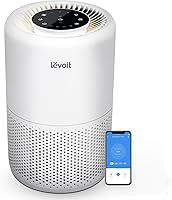
The Levoit Core 400S-P has AHAM-verified CADR figures of 231 CFM for smoke, 240 CFM for dust and 259 CFM for pollen. Levoit says it refreshes rooms up to 1,718 sq ft once per hour, a different pace from a faster multi-change target.
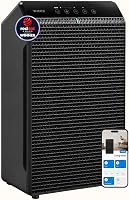
The Winix AT40 is AHAM verified at 410 sq ft, and its stated coverage is 1,968 sq ft in one hour. Its time-based figures also give 984 sq ft in 30 minutes, 656 sq ft in 20 minutes and 492 sq ft in 15 minutes.
These examples show why coverage figures need context. A 1,000 sq ft figure can describe a slower air refresh, while a smaller rating may reflect a faster pace.
Can one purifier handle an open 1,000 sq ft space?
One purifier can suit an open 1,000 sq ft area if its coverage rating matches your ceiling height and desired cleaning speed. Place it where air can move freely, away from furniture or corners that block airflow.
Open-plan rooms let air circulate between connected areas more easily than separate rooms. The purifier's intake and outlet still need clear space, and a higher fan setting may move more air.
A unit rated for a much larger area may give you room to use a lower fan setting, but the cleaning pace may also be lower. Choose based on the room-size rating at your preferred pace, not only the largest number.
If the space is divided into bedrooms, a hallway and a living room, one unit may not clean each area evenly. Consider placing a purifier where you spend the most time or using separate units for areas divided by doors.
Which air purifiers are options for 1,000 sq ft?
These four models have published coverage figures above 1,000 sq ft, but their stated cleaning paces vary. Compare each room-size figure with its time-based coverage before deciding which fits your space.
The Core 400S-P has an air-quality sensor, Auto Mode, app controls and Sleep Mode, with noise as low as 24 dB. These features may suit a shared space where you want automatic fan adjustments and phone control.
The AT40 includes an air-quality display, Auto Mode, WiFi control and two all-in-one filter sets. Its AHAM-verified area is 410 sq ft, so compare that figure with its larger, slower coverage claims.
The MA-50 has a stated CADR of 598, four fan speeds, a timer and a Sleep Mode that dims the panel lights. Its one-hour rating is relevant if that pace suits your needs.
Blueair's HEPASilent filtration captures airborne particles such as dust, pollen, smoke and pet dander. Its coverage figure is based on one hour, so compare it with a faster-pace rating if you want more frequent air changes.
Does ceiling height change the purifier size you need?
Yes. A higher ceiling adds air volume without changing floor area, so a purifier may need more airflow to refresh the room at the same rate.
A 1,000 sq ft room with 8 ft ceilings contains less air than the same floor area with 10 ft ceilings. A coverage rating based on floor area may not fully describe how the unit performs in a taller room.
Check whether the coverage figure names a ceiling height or ACH. If the brand doesn't give enough detail, use the room-size rating as a starting point and consider more airflow for an unusually tall space.
Should you use one purifier or several?
Use one purifier for a large, open area that matches its coverage rating. Consider multiple units when rooms are separated by walls or doors, or when you want targeted cleaning in several places.
A single unit can't pull air through closed doors. It may also have trouble reaching distant rooms if the connecting hallway is narrow or airflow is blocked.
For a home with separate rooms, start with the room where you spend the most time. A bedroom purifier can serve that room while another unit handles the living area, instead of expecting one machine to cover the whole floor plan evenly.
What else should you check before choosing?
Check the purifier's coverage at your preferred cleaning pace, then make sure its features fit how you'll use it. A large coverage rating helps only if you can place and run the machine comfortably.
- Room shape: Open layouts are easier to serve than several enclosed rooms.
- Ceiling height: Taller rooms have more air to clean.
- CADR: Compare smoke, dust and pollen figures where available.
- Noise: A higher fan speed may clean faster but can be harder to live with.
- Filter needs: Check the filter type and how the unit indicates replacement.
- Controls: Auto Mode, timers, app access and Sleep Mode can affect daily use.
- Placement: Leave open space around the purifier's air intake and outlet.
If the purifier will run through the day, consider its operating habits. Our guide to how much electricity an air purifier uses covers factors that affect energy use, while whether to leave an air purifier on all the time explains common run-time choices.
How do you choose an air purifier for 1,000 sq ft?
Choose an air purifier for 1,000 sq ft by matching its stated room size to your preferred cleaning pace, then account for ceiling height and room layout. For an open area, compare models with a one-hour coverage figure above 1,000 sq ft; for faster cleaning, check shorter time-based ratings or ACH.
Pick the Winix AT40 if its stated 984 sq ft in 30 minutes matches your needs. Consider the Levoit Core 400S-P, Medify MA-50 or Blueair Blue Pure 211i Max if their published features and one-hour coverage fit your routine.
For a broader starting point, see how to pick the best air purifier for your home. For other room sizes, compare our best air purifiers for small rooms guide.
Sources
- AHAM Verifide air cleaner directory
- U.S. Environmental Protection Agency: Guide to Air Cleaners in the Home
Frequently asked questions
What size air purifier do I need for 1,000 sq ft?
Choose a purifier with a published coverage rating of at least 1,000 sq ft at the cleaning pace you need. Compare the stated air changes per hour and CADR, then account for ceiling height, open doorways and the fan setting you can tolerate.
Can one air purifier clean an entire 1,000 sq ft home?
One purifier may circulate air across an open 1,000 sq ft area, but separate rooms and closed doors limit how well air mixes. For a home with bedrooms, hallways and doors, place a unit where you spend time or consider separate units for distinct spaces.
Is a 1,000 sq ft coverage rating enough for a large room?
It can be enough if the rating matches your room's ceiling height and desired cleaning pace. A rating based on one air change per hour may clean more slowly than you expect, so compare the maker's room-size and CADR details before choosing.
Does a higher CADR mean more square-foot coverage?
A higher CADR means more filtered air is delivered per minute, which can support faster cleaning in a room. It does not give a universal square-foot rating by itself; room height, target air changes and the maker's rating method also matter.
Should I buy a purifier rated for more than 1,000 sq ft?
A higher coverage rating can give you more flexibility if you want faster air cleaning or plan to run the purifier below its highest fan speed. Check the room-size rating at the relevant pace, along with noise, filter type and replacement needs.