Electrostatic Air Purifier vs HEPA: Which Fits Your Home? (November 2026)
Pick a HEPA purifier when you want proven particle capture without ozone worries; pick an electrostatic model only if washable filters matter more to you. In the electrostatic air purifier vs HEPA choice, your allergies, room size and tolerance for cleaning decide it.
On this page (9 sections)
- Electrostatic air purifier vs HEPA: the quick verdict
- How the two technologies actually work
- Particle capture: which filter catches more?
- Upkeep: washable plates or replacement filters?
- Running costs and filter bills over time
- Ozone and air quality concerns
- Room size and airflow: which type keeps up?
- Who should buy which?
- The verdict: electrostatic air purifier vs HEPA for your home
Pick a HEPA purifier when you want proven particle capture without ozone worries; pick an electrostatic model only if washable filters matter more to you. In the electrostatic air purifier vs HEPA choice, your allergies, room size and tolerance for cleaning decide it.
Both approaches clean air, but they do it in different ways. HEPA traps particles in a dense mat, while electrostatic models charge particles and pull them onto collection plates you wash.
That difference shapes everything from running costs to how often you touch the machine. This comparison covers what each type does well, where it falls short, and which homes should buy which.

Electrostatic air purifier vs HEPA: the quick verdict
HEPA wins for most homes. The filter media captures 99.97% of particles at 0.3 microns as a standard, and the design doesn't create ozone as part of normal operation.
You swap filters on a schedule and otherwise leave the machine alone. Electrostatic purifiers earn their place in a narrower set of homes because they skip disposable filters, which appeals to people who dislike ongoing costs or live where replacements are hard to find.
The catch is that they need regular washing and, on some models, produce a small amount of ozone. If you have allergies, pets or smoke in the house, buy HEPA.
If you want the lowest possible filter spend and will wash plates every few weeks, an electrostatic model can work. Our HEPA air purifier picks show what the standard looks like in practice.
For a broader walkthrough of choosing a unit by room and need, see the air purifier for home guide.
How the two technologies actually work
HEPA is a physical filter; electrostatic cleaning is a charging process. One traps particles in fibers, the other pulls charged particles onto plates, and the rest of the differences follow from that.
A HEPA filter is a mat of randomly arranged fibers. Air gets pushed through it, and particles stick through interception, impaction and diffusion.
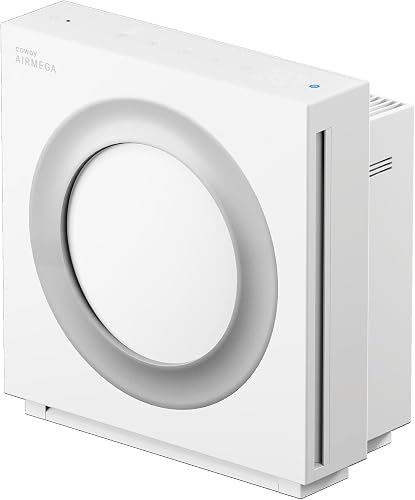
The Coway Airmega AP-1512HH pairs this HEPA stage with a washable pre-filter and a deodorization filter, so larger dust and odors get handled before the air reaches the HEPA media. Coway says the combination reduces 99.97% of 0.3 micron particles, including pollen and other allergens.
An electrostatic purifier works differently. Particles pass through an ionizing section that gives them a charge, then they're attracted to oppositely charged collection plates.
Some units use a washable electrostatic filter rather than bare plates. The particles stay on the plates until you remove and rinse them, and no dense filter mat stands between you and the air, so airflow is often less restricted.
Particle capture: which filter catches more?
HEPA has the clearer particle-capture story. The 99.97% at 0.3 microns figure is a recognized filter standard, and makers like Coway cite independent testing to back it, so you know roughly what you're getting before you buy.
Electrostatic performance is real but harder to pin down. Capture depends on how clean the plates are, how much charge they hold and how fast air moves through.
A fresh, clean electrostatic unit can do well on fine particles. A dirty one drops off, and the drop isn't always obvious from the outside.
That matters most for allergy and asthma households. Pollen, dust mite debris and pet dander are the particles people want gone, and a filter that quietly loses efficiency works against you.
The Levoit Core 300-P, for example, is HEPA-grade in Sleep Mode and rated at 99.97% filtration for 0.1 to 0.3 micron particulates. That's a straightforward claim you can compare across models.
If your main concern is fine particulate from smoke or traffic, HEPA is the predictable pick. Electrostatic units still help, but only if you keep the plates in good condition.
Upkeep: washable plates or replacement filters?
Electrostatic saves on filters but costs you time; HEPA costs money but asks little of you. Pick the trade-off you'll actually keep up with, not the one that looks cheaper on paper.
An electrostatic purifier's collection plates need washing every few weeks. Skip it and the unit loses charge and stops capturing, which is a chore many people start enthusiastically and drop by month three.
HEPA units use a fan to push air through the filter, and the filter gets replaced on a schedule. The Coway AP-1512HH's filter indicator tracks how much air has passed through and tells you when to swap the HEPA filter or clean the pre-filter.
The Mighty2 goes further, showing remaining filter life from 100% down to 0% for both the pre-filter and the 2-in-1 HEPA and carbon filter. You don't guess, and you don't wash a plate unless the unit tells you to clean the pre-filter.
A middle path exists. Some HEPA units include a washable pre-filter you rinse to extend the life of the disposable HEPA stage.
Our air purifier with washable filter guide covers those models, and it's a smart compromise if filter costs are your main worry.
Running costs and filter bills over time
Electrostatic wins on disposable filter spend; HEPA wins on predictable running costs. The total depends on your electricity rate and how long you keep the unit.
Electrostatic purifiers avoid replacement filter costs almost entirely because the plates are washed, not swapped. That's the biggest draw for people who dislike recurring purchases or live somewhere filters are expensive to ship.
HEPA purifiers carry a filter bill. The Levoit Core 300-P uses a 3-in-1 filter, and Levoit recommends replacing it every 6 to 8 months.
Factor that into the first few years of ownership. A unit with a washable pre-filter like the Coway AP-1512HH stretches the disposable stage further, since the pre-filter catches the bulk of the dust before it reaches the HEPA media.
Electricity is the other side. The Mighty2 runs at a maximum of just 56W, and its Eco-Mode drops to energy-saving operation when the air is clean.
That's modest for a unit covering up to 1,800 sq ft. Electrostatic units also draw power to charge particles, so the electricity gap between the two types is often smaller than the filter-cost gap.
Ozone and air quality concerns
HEPA doesn't produce ozone as part of how it cleans; some electrostatic units do. That single difference decides the choice for many households, especially ones with asthma or young children.
HEPA is a mechanical filter. Air goes through the media, particles get trapped and clean air comes out, with no charging step and no ionizing wire, so ozone isn't part of the process.
Electrostatic and ionizing designs charge particles, and that charging can create ozone as a byproduct. Output varies widely by model.
In California, air purifiers must meet CARB rules that cap ozone emissions, so a CARB-certified unit has passed a check on that front. Levoit lists the Core 300-P as CARB compliant for California indoor air quality standards.
If you want the full picture of how ionizing designs compare with filters, the air purifier vs ionizer breakdown explains the trade-offs. For most homes, HEPA's no-ozone operation is the deciding factor.
Room size and airflow: which type keeps up?
Match the purifier to the room, not the technology. Coverage and clean air delivery rate matter more than whether the filter is HEPA or electrostatic.
Airflow is where electrostatic units often have an edge. With no dense filter mat in the way, air moves more freely, so a smaller unit can cycle a room quickly, and that can suit a workshop or a garage where you want constant air movement.
HEPA units trade some airflow for capture, but the numbers still matter. The Coway AP-1512HH covers up to 1,748 sq ft in 60 minutes.
The Mighty2 covers up to 1,800 sq ft in 60 minutes, or 900 sq ft in 30. The Levoit Core 300-P is rated at 143 CFM CADR for smoke and refreshes a 222 sq ft room 4.8 times per hour.
Those figures let you compare units directly, whatever the filter type. For a single bedroom, a compact HEPA unit like the Core 300-P is enough, and for an open-plan living area or a large basement, go bigger.
Our room-by-room purifier guide helps translate square footage into a unit size.
Who should buy which?
Buy HEPA if anyone in the house has allergies, asthma or a smoke concern. The particle-capture standard is clear, the maintenance is low and there's no ozone byproduct.
The Coway AP-1512HH is the best all-round choice for most homes, with four-stage filtration, a washable pre-filter and Auto mode that adjusts to real-time air quality. It's also our highest-scored unit here at 8.7.
The Mighty2 suits large, open spaces. Its MegaScan laser sensor reads PM1, PM2.5 and PM10 and shows a numeric air quality display, so you can see what's happening in a big room.
It runs at a maximum of 56W and covers up to 1,800 sq ft in an hour, but it's heavier than the AP-1512HH and combines its particle and carbon stages in one filter.
The Levoit Core 300-P is the bedroom pick. At 24 dB in Sleep Mode and with the display lights switchable off, it stays out of the way at night, and it's our second-highest score at 8.6 with coverage up to 1,073 sq ft once per hour.
Note it lacks Auto Mode, so you set the fan speed yourself.
Electrostatic models fit a narrower buyer: someone who wants washable filters and will keep the plates clean. If filter bills are your main concern, the washable pre-filter on the Coway units gives you part of that benefit without giving up HEPA capture.
The verdict: electrostatic air purifier vs HEPA for your home
For most homes, HEPA is the better buy. The electrostatic air purifier vs HEPA comparison comes down to certainty: HEPA gives you a known capture standard, low maintenance and no ozone byproduct, and that combination is hard to beat for allergy, pet and smoke households.
Electrostatic units make sense when washable filters are the priority and you'll keep the plates clean. That's a real benefit, just a narrower one, and the upkeep is the catch, with some models adding ozone concerns.
Our overall pick is the Coway Airmega AP-1512HH at 8.7. It pairs HEPA filtration with a washable pre-filter, adds Auto mode and an air quality indicator, and covers up to 1,748 sq ft in an hour.
For a large room, the Mighty2's laser sensor and 1,800 sq ft coverage make it the size upgrade. For a bedroom, the Levoit Core 300-P's 24 dB sleep mode wins.
If you want to keep comparing filters and features before you buy, our best HEPA air purifier list is the next stop.
Frequently asked questions
Is an electrostatic purifier better than a HEPA purifier?
No, HEPA is the safer default for most homes because its particle capture is a settled standard and it produces no ozone by design. Electrostatic models can work well, but their performance depends on plate condition and cleaning, so they suit people who will keep up with maintenance.
Do electrostatic air purifiers produce ozone?
Some do, because charged plates and ionizing wires can generate ozone as a byproduct. Check whether a model is CARB certified for California, which limits ozone output.
HEPA purifiers move air through a filter and don't rely on charging particles, so ozone isn't part of how they clean.
How often do you clean an electrostatic filter?
Wash the collection plates or cells every few weeks, or more often in a dusty home. Dirty plates lose their charge and stop capturing particles, so a neglected electrostatic filter can perform worse than a HEPA filter that's simply getting old.
Which type costs less to run over a few years?
It depends on electricity and filter prices in your area. Electrostatic models skip disposable filter costs but use power to charge plates and need washing.
HEPA units use a fan plus replacement filters every 6 to 8 months on models like the Levoit Core 300-P.
Can I use a HEPA purifier if I have allergies?
Yes, a HEPA purifier is the usual first choice for allergy sufferers because the filter captures pollen, dust and pet dander particles. Run it in the room where you spend the most time and keep doors closed so it can cycle the air.


