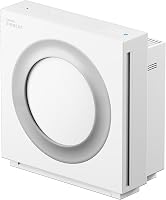
Whole House UV Air Purifier vs HEPA: What Differs? (November 2026)
A whole house UV air purifier treats what its lamps reach; a HEPA system traps particles on a filter. In a whole house uv air purifier vs hepa comparison, UV works inside a duct or on a coil, while HEPA cleans the air a portable unit moves.
On this page (9 sections)
- Whole house UV air purifier vs HEPA: which one should you install first?
- How the two technologies work side by side
- Coverage: a duct system vs a single room
- Installation and upkeep for each option
- Cost and filter replacement in practice
- Odor and gas control when you compare UV and HEPA
- Who should buy the UV duct unit?
- Who should buy a HEPA purifier instead?
- Verdict: which wins for most homes?
A whole house UV air purifier treats what its lamps reach; a HEPA system traps particles on a filter. The whole house uv air purifier vs hepa choice is really a choice of jobs: UV light works on surfaces and the air passing its lamp, while HEPA cleans particles from the air a unit moves.
These are not interchangeable products, because one mounts inside your HVAC duct and shines light on what passes by while the other is a filter stage that catches dust, pollen and dander.
 Best for duct UV cleaning
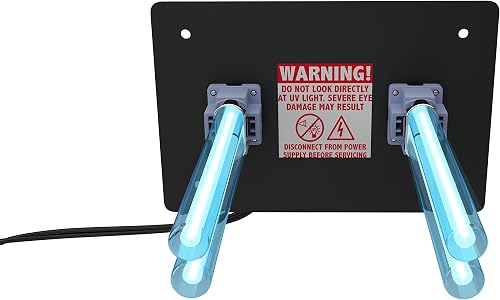
REKOLIGHTING REKO Lighting R2000 Air Purifier Whole

Whole house UV air purifier vs HEPA: which one should you install first?
Install HEPA filtration first if your goal is cleaner air in the rooms you use. A HEPA stage removes particles from the air, while UV light is a treatment step rather than a filter.
A duct UV unit like the REKOLIGHTING R2000 does not catch dust. It shines two 253.7 nm UV-C lamps into the air stream, so the light reaches whatever passes the lamp while the HVAC fan runs.
A HEPA purifier works the opposite way. The Coway Airmega AP-1512HH pushes room air through four stages and its HEPA filter, rated to reduce 99.97% of 0.3 micron particles.
If you want the air in a bedroom or living room cleaner, a portable HEPA unit gives you that directly. If you want to add UV treatment to the ductwork, the R2000 fits that job.
For a home with no filter upgrade in sight, the portable HEPA unit is the faster fix.
How the two technologies work side by side
UV light acts on what it illuminates; HEPA removes particles by trapping them. Understanding that split stops you buying one when you need the other.
The R2000's bulbs put out 253.7 nm UV-C. That wavelength sits in the UV-C band, and the unit is designed to be installed on an HVAC duct so the lamps sit in the moving air.
HEPA filters are dense mats that catch particles as air passes through. The Coway unit's HEPA stage, for example, sits after a washable pre-filter, a deodorization filter and its bipolar device.
One treats air in a duct; the other cleans a room, and that is the core of the whole house uv air purifier vs hepa question.
What UV-C can and cannot do in a duct
The R2000 shines light on moving air and nearby surfaces. Dwell time matters, so a fast air stream gives the lamp less time to act on what passes.
It does not remove dust, pollen or dander. Those particles keep moving until something filters them out.
The unit also needs its lamps replaced over time, so plan for that part cost.
Two lamps instead of one give the R2000 more light across the duct opening. It measures 9 by 8 by 8 inches and weighs 1.5 lb, so it sits compactly against a duct run, and its 9 ft cord plugs into a regular 120V outlet.
None of that changes the basic limit: light acts on what it touches, and moving air passes quickly.
What a HEPA stage actually catches
HEPA filtration is a particle job. The Coway Airmega's HEPA stage reduces 99.97% of particles at 0.3 microns.
The Winix 5510 goes further on paper with a True HEPA stage rated for 99.99% of particles as small as 0.01 microns. It pairs that with a carbon filter for odors.
The GermGuardian AC4825E shows both approaches in one tower: a HEPA filter rated for 99.97% of particles to 0.1 microns, plus an optional UV-C bulb. That combination is the practical middle ground for a small room.
The UV bulb works alongside the HEPA and carbon stages, so the filter catches the bulk of the dust and the lamp adds a treatment step.
Coverage: a duct system vs a single room
A duct UV unit treats the air your HVAC moves through the whole house; a portable HEPA purifier cleans only the room it sits in. Match the coverage to the space you care about.
The R2000 is rated for air systems from 1 to 5 tons. It mounts in the duct, so it works wherever your HVAC system sends conditioned air.
The in-duct depth is 8 inches, which is the figure to check against your own duct size before you cut.
Room purifiers are limited by their own airflow. The Coway covers up to 1,748 sq ft in 60 minutes.
The Winix 5510 handles up to 1,881 sq ft in an hour. The GermGuardian AC4825E is a smaller unit, rated for 743 sq ft in an hour.
If you want treated air in every room, the duct unit is the only one here that sits in the shared air path. If you want clean air in a bedroom, a portable HEPA purifier is the simpler fit.
In a home with several closed doors, a room rating only applies to the room where the unit stands.
Our guide to the best HEPA air purifiers compares units by room size and filter type. That helps you match coverage before you buy.
Installation and upkeep for each option
The duct UV unit needs a one-time install and bulb changes; a HEPA purifier needs filter replacement on a schedule. Compare the effort each one asks of you.
The R2000 comes with a template and self-drilling screws. You cut two 1.75 inch holes in the duct, slip the lamps in and attach the unit.
Then you plug it in with the included 9 ft cord. REKO Lighting describes the job as about 15 minutes, though cutting into a duct is a step some homeowners will want a pro to handle.
A portable HEPA unit just needs a spot near the room's air flow. The Coway Airmega adds filter alerts and a washable pre-filter to cut some upkeep.
The Winix 5510 also has a washable fine mesh pre-filter before its True HEPA and carbon stages. HEPA filters are replaceable parts, and so are carbon filters and UV bulbs.
Which parts you will replace, and how you know when
The Coway's filter indicator tracks how much air the unit has processed and signals when the HEPA filter needs replacing and the pre-filter needs cleaning. The Winix 5510 carries an air quality indicator and a light automated sleep mode.
The GermGuardian lists its replacement parts by name: HEPA filter B (FLT4825 and related codes), UV-C bulb LB4000 and carbon filter FLT22CB4. Knowing the part numbers up front makes the running cost easier to plan.
The R2000's part cost is limited to its two UV-C lamps, and there is no filter to swap.
If washable stages matter to you, see our roundup of air purifiers with washable filters.
Cost and filter replacement in practice
UV bulbs are cheaper to replace than HEPA filters, but a UV unit does less for particles. Weigh part costs against the job you want done.
The R2000's running cost centers on its two UV-C lamps. The Coway's upkeep centers on its HEPA filter, plus its pre-filter cleaning and its deodorization filter.
The Winix 5510 adds a carbon filter to its replaceable list. The GermGuardian AC4825E needs a HEPA filter B and an optional UV-C bulb.
A HEPA purifier that runs in one room costs more in filters the more hours it runs. A duct UV unit runs with the HVAC system and adds less filter cost per room.
Neither replaces the other's job, because a UV unit won't catch dust and a HEPA filter won't act on surfaces the way a lamp can. A buyer comparing the two should count how often each part gets replaced, not just what one part costs at a time.
Odor and gas control when you compare UV and HEPA
Neither a UV lamp nor a plain HEPA filter removes gases and odors well; a carbon stage does that work. If smoke or cooking smells are your reason to buy, look at the filter stack.
The Coway's four stages include a deodorization filter that reduces volatile organic compounds and odor. The Winix 5510's advanced carbon filter is built to catch household odors from cooking, pets and smoke.
The GermGuardian uses an activated carbon pre-filter for scents from cooking and pets.
The R2000's UV-C lamps are not an odor filter. If smells are your main concern, a HEPA unit with carbon is the better first buy.
You can read more in our look at whether air purifiers with UV light earn their place.
If you are weighing a different particle technology entirely, our electrostatic air purifier vs HEPA comparison covers that choice. A kitchen or a living room with pets puts more odor into the air, so a purifier with carbon earns its keep there.
A bedroom with no smell issue gets little from an extra carbon layer.
Who should buy the UV duct unit?
Buy the REKOLIGHTING R2000 if you want UV-C treatment added to your HVAC duct and already have a working system. It's the only unit here built for duct mounting.
It suits a homeowner who wants light treatment on the air stream and the coil area, and who can cut into the duct. The two lamps at 253.7 nm and the 120V plug make it a focused add-on.
Its bulbs are made in Europe, and the EPA establishment number is 96373-FL-1.
Skip it if particle removal is the goal. A UV unit won't filter dust, so pair it with a HEPA stage somewhere in the home.
Also check that your duct has room for the 8 inch in-duct depth and that an outlet sits within reach of the 9 ft cord before you order.
Who should buy a HEPA purifier instead?
Buy a HEPA purifier if you want fewer particles in the rooms you actually sit in. All three room units here filter particles; pick by room size and features.
The Coway Airmega AP-1512HH is the strongest all-round choice. It covers up to 1,748 sq ft in 60 minutes, cleans through four stages, and its auto mode adjusts the fan to real-time air quality.
The Winix 5510 is the pick for a very large open room. It's rated for up to 1,881 sq ft in an hour, adds app control, and has a carbon filter for odors.
Winix also says its slowest speed runs at 23.5 dB.
The GermGuardian AC4825E is the budget pick for a small bedroom or office. Its 743 sq ft hourly rating and optional UV-C bulb make it the least costly way to try both technologies in one tower.
Its 22 inch tower and 8.55 lb weight make it easy to move between rooms.
Our best HEPA air purifiers roundup puts these side by side by coverage and filters.
Verdict: which wins for most homes?
For most homes, HEPA wins as the first purchase because particle removal is what people notice. A whole house UV air purifier is a useful second step for the duct, not a replacement for filtration.
The REKOLIGHTING R2000 holds the highest overall score in this comparison, but its strength is duct UV treatment. Its dual UV-C lamps at 253.7 nm and its duct mount make it the clear choice when you want UV treatment wired into your HVAC system.
The Coway Airmega AP-1512HH at 8.7 is the best HEPA purifier for a main living area. If dust and pollen are your reason to buy, start here and add UV later.
The Winix 5510 at 8.5 suits a big open room with app control, and the GermGuardian AC4825E at 7.1 covers a small room for less.
Our score weighs specs, features and buyer feedback against what you're shopping for. The decision rule is simple: choose HEPA for particles, choose UV-C for duct treatment, and run both when your home needs each.
Frequently asked questions
Does a whole house UV air purifier replace a HEPA filter?
No. UV light is designed to act on what it shines on, while HEPA filtration physically catches particles.
Most homes that want particle removal still need a filter, either in the HVAC system or in a portable HEPA unit.
Is UV light or HEPA better for dust and pollen?
HEPA is the better fit for dust and pollen. A HEPA filter captures 99.97% of 0.3 micron particles when rated that way, while UV light passing over a lamp has less time to act on particles in moving air.
Where does a whole house UV purifier get installed?
It mounts into the HVAC duct, so the UV-C lamps shine on the air stream or the cooling coil as the system runs. Installation means cutting openings in the duct and running power to the unit.
Can I run both a UV purifier and HEPA filtration together?
Yes. A duct UV unit and a portable HEPA purifier do different jobs in the same home.
Many buyers run a HEPA unit in the bedroom and leave UV treatment to the HVAC system.
Does a HEPA filter remove odors and gases?
A HEPA filter is built for particles, not gases. Odor and gas control comes from a separate carbon stage, which several HEPA purifiers here include alongside the particle filter.