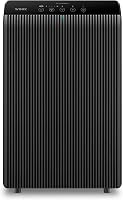
Air Purifier vs Ionizer: Is an Ionizer Worth It? (October 2026)
A filter-based air purifier is the clearer choice when you want airborne particles captured in a filter. Consider an ionizer only after checking the exact model’s particle performance and ozone emissions.
On this page (11 sections)
- Air purifier vs ionizer: how do they work?
- Is an ionizer worth it for home use?
- Which option is better for dust, pollen and smoke?
- Which one is better for odors?
- What should you check before buying an ionizer?
- How do filter changes and cleaning differ?
- How should you set up and use an air purifier?
- What common mistakes should you avoid?
- Can an ionizer replace a HEPA air purifier?
- Which air purifier vs ionizer should you choose?
- Related guides
Choose a filter-based air purifier when you want airborne particles captured in a filter. In an air purifier vs ionizer comparison, the main difference is whether particles are trapped in filter material or charged so they settle or collect elsewhere.
An ionizer may suit a narrower set of needs, but its name alone doesn’t tell you how it handles particles or what it releases. Check the exact model’s performance information and ozone emissions before using one indoors.
For dust, pollen, smoke and pet dander, a filter-based unit is the more direct option. Our guide to HEPA air purifiers explains how to compare filter claims and room performance.


Air purifier vs ionizer: how do they work?
A filter-based purifier draws room air through material that captures particles; an ionizer charges particles so they settle or collect on a surface. That difference affects where the particles end up and what care the device needs.
A purifier with a mechanical filter moves air through one or more layers. Captured dust, pollen and other particles stay in the filter until you replace it or clean the parts the manual says are washable.
Ionizers use an electrical charge to affect particles in the air. Depending on the design, particles may stick to a collection plate or settle on floors, furniture and other nearby surfaces.
How does air purifier vs ionizer particle removal differ?
A filter-based air purifier collects captured particles inside its filter, while an ionizer may leave particles on room surfaces. If you want to remove settled dust, you’ll still need to clean those surfaces.
An ionizer may reduce the amount of some particles floating in the air while it operates. The result depends on the model, room and air movement, so look for independent performance information for the exact device.
What does a filter-based purifier capture?
The filter type and its performance information determine what a purifier is designed to capture. Compare the model’s stated particle range and room performance with the issue you want to address.
The Levoit Core 300-P has a 3-stage filter and AHAM VERIFIDE status. Levoit says its filter has 99.97% filtration efficiency for airborne particles from 0.1 to 0.3 microns, based on independent lab testing.
Is an ionizer worth it for home use?
An ionizer may be worth considering when its particle performance is independently documented and its ozone emissions meet your needs. If those details are hard to find, a filter-based purifier is simpler to assess and care for.
Before buying, check the exact model’s emissions information and a recognized certification relevant to ozone. Don’t assume a claim about negative ions or a low-maintenance design proves the device is safe or effective for your room.
Think about the problem you want to solve. A particle filter can capture airborne particles, but settled dust still needs cleaning, and a musty odor may signal moisture that an air cleaner won’t fix.
For persistent mustiness, read whether an air purifier can help with a musty smell. If dampness is the main issue, an air purifier vs dehumidifier comparison can help you choose between particle control and moisture control.
Which option is better for dust, pollen and smoke?
A filter-based purifier is the direct choice when your goal is to capture airborne dust, pollen or smoke particles. Choose a model with performance suited to the room where you’ll run it.
The Blueair Blue Pure 311i Max uses HEPASilent dual filtration. Blueair says it captures 99.97% of airborne particles down to 0.1 microns, including dust, pollen, pet dander, mold particles and smoke.
The Medify MA-25 uses True HEPA H13 filtration. Medify says it removes 99.9% of particles down to 0.1 microns, and gives its coverage as 825 square feet in 1 hour.
These claims use different conditions, so don’t treat the figures as a direct head-to-head comparison. Consider the room rate, filter care and the particle types each model is designed to capture.
Which one is better for odors?
Neither an ionizer nor a particle filter is a reliable fix for every odor; find the source first. Some purifiers use activated carbon to adsorb gases and odors, but the amount and type of carbon matter.
A musty smell can come from damp materials or hidden moisture. An air cleaner may capture some airborne particles, but it won’t dry a wall, repair a leak or remove mold growing in building materials.
Smoke and cooking odors may call for ventilation or cleaning. If odor control is a priority, look for a purifier with a filter designed for gases and follow its replacement guidance.
If the smell seems to come from the purifier itself, learn why an air purifier may smell. For help matching a device to your room and needs, see how to pick an air purifier for your home.
What should you check before buying an ionizer?
Check ozone emissions, independent performance information and the particle collection method before buying an ionizer. These details help you judge how it fits your room and routine.
- Ozone emissions: Look for specific emissions information and a recognized certification for the exact model.
- Particle performance: Seek independent data that identifies the room, particle type and measurement method.
- Collection method: Check whether particles gather on a plate or settle on surfaces, and how to clean the plate or room.
- Room fit: Match the device to your room size and layout, using the manufacturer’s guidance.
- Ongoing care: Find out whether the unit needs plate cleaning, filter changes or another regular task.
If you can’t find enough detail to answer these questions, choose a filtration model with clearly described filters and room performance. A low-maintenance label doesn’t tell you where the particles go.
How do filter changes and cleaning differ?
Filter-based purifiers need filter care; ionizers may need plate cleaning and more frequent surface cleaning. Follow the manual for the exact unit, since maintenance varies by design.
A clogged or overdue filter can reduce airflow. Check whether the unit has a pre-filter, particle filter and carbon layer, then follow the replacement schedule for that model.
Ionizers can leave charged particles on collection plates or room surfaces. Clean those areas as directed, and don’t use a device with a damaged or dirty component if its manual warns against it.
Our guide to washing a HEPA filter explains why many filters aren’t washable. If a unit seems ineffective, see how to tell if an air purifier is working.
How should you set up and use an air purifier?
Place a filter-based purifier where it can draw in and release air freely, then choose a fan setting you can run consistently. Keep it clear of walls, curtains and furniture according to the manual.
Match the room rate to the room where you spend time. A large coverage figure may describe a slower cleaning rate, so check how quickly the unit refreshes air at the conditions you care about.
For a bedroom, consider noise and display lights as well as filtration. The Levoit Core 300-P offers Sleep Mode, a timer and lights that can be turned off, while the Blueair has sensors and app controls for automatic adjustment and scheduling.
Check the filter indicator and replacement guidance instead of waiting for a noticeable decline. Keep the intake and outlet clear of dust, and clean any washable pre-filter only as the manual directs.
Ionizer setup also depends on its design. Follow the specified placement and operating instructions, keep collection plates clean as directed, and avoid running a model whose ozone information is unclear.
What common mistakes should you avoid?
The biggest mistakes are choosing by a broad coverage claim, expecting particle filtration to solve every odor and ignoring routine care. Match the device to the room and the problem before comparing extras.
- Treating all room rates as equal: A room figure may assume one air change per hour, while another model gives a faster rate for a smaller area. Compare the conditions behind the claims.
- Expecting a particle filter to remove every gas: Dust and pollen are particles; odors and some gases need other approaches, such as suitable carbon filtration or source control.
- Assuming settled particles are gone: An ionizer can move particles from the air to surfaces. Cleaning is still part of the routine.
- Ignoring filter costs and timing: Check which replacement filter fits and how often the manufacturer recommends changing it.
- Blocking airflow: A purifier needs room to draw in and release air. A cramped corner or covered intake can interfere with circulation.
- Buying features you won’t use: App scheduling and automatic fan changes can help some households, but manual controls may be enough for a single room.
Can an ionizer replace a HEPA air purifier?
An ionizer isn’t automatically a replacement for a HEPA purifier because the two handle particles differently. If you want particles collected in a filter, choose a filter-based model with performance suited to your room.
An ionizer may reduce airborne particle levels in some conditions, but it can leave particles on surfaces. A filter-based purifier gathers captured particles in its filter, which you then replace or maintain as directed.
You can compare another added technology in our guide to air purifiers with UV light. UV features and ionization work differently, and neither removes the need to choose an appropriate filter when particle capture is your priority.
Which air purifier vs ionizer should you choose?
Choose a filter-based air purifier if you want airborne particles captured and a clear filter care routine. Choose an ionizer only when the exact model has credible performance information and ozone emissions you’re comfortable with.
For a bedroom, consider the Levoit Core 300-P, with Sleep Mode and manual fan control. Choose the Blueair Blue Pure 311i Max if you want sensors and app controls, or the Medify MA-25 for tabletop placement and HEPA H13 filtration.
If odor or dampness is the real concern, deal with the source as well as choosing an air cleaner. Start with air purifiers for musty smells or compare an air purifier with a dehumidifier for a damp room.
Related guides
- Best HEPA air purifiers
- Air purifiers with UV light
- Air purifier vs dehumidifier for a damp room
- How to tell if an air purifier is working
Frequently asked questions
Is an air purifier better than an ionizer?
A filter-based air purifier is often the clearer choice when you want airborne particles captured in a filter. Ionizers charge particles so they settle on surfaces or collect on a plate, depending on the design.
Check independent performance information and ozone emissions for the exact device before choosing.
Do ionizers produce ozone?
Some ionizers can produce ozone, a lung irritant, so check the exact model's emissions and certification before use. Avoid relying on broad labels such as “air cleaner” alone.
If you have asthma or another breathing concern, ask a health professional about your household's needs.
Can an ionizer remove dust from a room?
An ionizer may cause some airborne particles to settle onto surfaces, depending on its design and room conditions. That doesn't mean the particles have left the room.
Wiping surfaces can remove settled dust, while a filter-based purifier captures particles on its filter.
Does a HEPA purifier remove odors?
A particle filter can capture some airborne particles, but odors may need a suitable activated carbon filter or another source-specific fix. Check what filter layers the exact purifier uses.
For a persistent musty smell, find and address moisture or mold rather than masking the odor.
Should you run an ionizer all day?
Follow the device instructions and verify its ozone emissions before running an ionizer, especially in an occupied room. Continuous operation doesn't make an unsuitable device safe or prove it will clean the air you care about.
For a filter-based unit, follow its manual and filter replacement guidance.