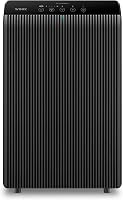
Blueair vs Honeywell Air Purifiers: Which Is Better? (November 2026)
Choose Honeywell for raw cleaning power and verified coverage per dollar, and choose Blueair for a smart, quiet bedroom purifier. The higher-scoring Honeywell PowerPlus HPA3100 wins overall in this Blueair vs Honeywell air purifier comparison, while the Blueair Blue Pure 511i Max suits app control and near-silent sleep.
On this page (9 sections)
- Blueair vs Honeywell air purifiers side by side
- Which purifier cleans a room faster?
- Which handles smoke, dust and odors better?
- Which is quieter for a bedroom?
- Which smart features matter?
- How do filter costs compare?
- Who should buy the Honeywell PowerPlus?
- Who should buy the Blueair 511i Max?
- Verdict: which air purifier should you buy?
Choose Honeywell for raw cleaning power and verified coverage per dollar, and choose Blueair for a smart, quiet bedroom purifier. The Honeywell PowerPlus HPA3100 wins this Blueair vs Honeywell air purifier comparison overall on its 9.2 score, while the Blueair Blue Pure 511i Max earns its place as the better pick for app control and silent sleep.
The two brands take different routes to clean air. Honeywell leans on mechanical HEPA filtration with a carbon pre-filter and AHAM Verified ratings.
Blueair combines mechanical and electrostatic filtration in its HEPASilent system and adds smart sensors and app control.
Neither brand is universally better. Your room size, noise tolerance and whether you want an app decide which one to buy.


Blueair vs Honeywell air purifiers side by side
The Honeywell PowerPlus is the stronger all-round purifier; the Blueair 511i Max is the quieter, smarter specialist. Here is how the two models line up on the features that change daily use.
| Feature | Honeywell PowerPlus HPA3100 | Blueair Blue Pure 511i Max |
|---|---|---|
| Score | 9.2 | 7.6 |
| Rated coverage | 200 sq ft at 4.8 air changes per hour | 1,138 sq ft in one hour |
| Filtration | HEPA plus carbon pre-filter | HEPASilent dual filtration |
| Particle capture | Over 99.99% of airborne particles | 99.97% down to 0.1 microns |
| Cleaning levels | 4 plus Auto Mode | Auto fan speed via sensors |
| Smart features | None | App control and air quality sensors |
| Quietest setting | Not published | 19 dB |
| Odor control | Carbon pre-filter | |
| Filter replacement | R HEPA annually, A pre-filter every 3 months | App reminders |
The Honeywell's headline number is honest about its limits: 200 square feet at 4.8 air changes per hour, a real cleaning rate rather than a one-air-change figure. Blueair's 1,138 square feet figure assumes a single air change per hour in an open space.
For a bedroom or living room you actually occupy, the Honeywell's tighter rating is the more useful guide. For a large open-plan area where you want fast turnover of air in a small zone, the Blueair's 237 square feet in about 12.5 minutes is a genuine strength.
The table also shows where the two units differ in size and footprint. The Honeywell measures 13.9 by 9.2 by 15 inches and weighs 6.4 pounds.
The Blueair is 10.6 by 10.6 by 18.9 inches and weighs 2.84 pounds. The Blueair's taller, narrower 360 degree design lets it tuck into a corner, while the Honeywell is shorter and wider and better placed against a wall or on a low stand.
Which purifier cleans a room faster?
For a normal bedroom, the Honeywell cleans more thoroughly per pass; the Blueair refreshes small rooms quickly. Speed and thoroughness are different measures, and the labels can mislead.
Honeywell says the PowerPlus circulates air 4.8 times per hour in a 200 square foot room. That is 115 air changes a day, and it is measured to a third-party smoke CADR standard when the unit runs at its highest level.
Blueair's 511i Max cleans 237 square feet in about 12.5 minutes and up to 1,138 square feet in one hour. That speed is real for a small bedroom or nursery, but the one-hour figure assumes just one air change in the larger space.
Air changes per hour tell you how often the whole volume of a room passes through the filter. A purifier rated at 4.8 changes per hour in your room size will scrub the air far more often than one rated at a single change.
If you have a 200 square foot bedroom, the Honeywell is the better cleaning tool. If you have a 300 square foot open living area and want quick turnaround in the seating zone, the Blueair's fast small-room cleaning helps.
Our guide to picking the best air purifier for your home explains how to match CADR and air changes to each room.
Which handles smoke, dust and odors better?
The Honeywell has the edge on odors thanks to its carbon pre-filter; both handle smoke and dust particles well. Particle capture is close, so odor control becomes the deciding factor.
The Honeywell PowerPlus pairs its HEPA filter with a carbon pre-filter. The HEPA layer captures over 99.99% of microscopic airborne particles such as dust, pet dander, pollen and smoke, and the carbon layer helps reduce household odors.
Honeywell also sells optional Enhanced Odor and VOC "S" filters that target pet, kitchen, smoke and renovation odors. They are sold separately, so budget for them if odors are your main problem.
Blueair's HEPASilent technology captures 99.97% of airborne particles down to 0.1 microns, including dust, pollen, pet dander, mold particles and smoke. The design does not emphasize a separate carbon odor stage.
What each purifier targets
Blueair names the contaminants its filtration targets directly: smoke, dust, pet dander, pollen and mold particles. That is a broad list for a single filter cartridge.
Honeywell's stated focus is dust, pollen, pet dander and smoke from the HEPA layer, plus household odors from the carbon pre-filter. Its optional S filters are the route to tougher VOC and odor jobs such as renovation fumes.
The practical difference is where the work happens. Blueair asks one cartridge to do everything.
Honeywell splits particles and odors into two stages and lets you upgrade the odor stage.
If cooking smells, pet odors or smoke from a wood stove bother you, the Honeywell's carbon pre-filter and optional odor filters give it the practical advantage. If you mainly want fine particles removed in a bedroom, the Blueair's capture spec is strong enough.
Check the HEPA air purifier options if you want to compare particle filtration across more models.
Which is quieter for a bedroom?
The Blueair 511i Max is the quieter pick on low, running as quietly as 19 dB. That is close to the noise floor of a quiet room, so it can run overnight without intruding.
Blueair built the 511i Max for bedrooms, nurseries and dorm rooms. The 19 dB low setting and the compact 360 degree design let it sit discreetly in a corner while it works.
Honeywell does not publish a low-speed noise figure for the PowerPlus. It offers a night dimmer that darkens the controls and a 2/4/8 hour timer, so it is designed for bedroom use, but the Blueair's stated 19 dB is the clearer quiet claim.
Noise on high matters too. A purifier that is silent on low but loud on high is only useful if your air stays clean at low.
For allergy season, you may run it higher, so consider how often you need the top speed.
For light sleepers and nurseries, the Blueair's stated low-noise figure makes it the safer bet. For a living room or home office where some fan noise is acceptable, the Honeywell's extra cleaning power is worth more than the quiet edge.
Which smart features matter?
Blueair wins on smart features with app control and automatic fan speed; Honeywell wins on simplicity. Decide whether you want to manage your purifier from your phone or just set it and forget it.
The Blueair 511i Max has built-in air quality sensors that raise the fan speed when pollution rises. The Blueair app lets you monitor air quality, change settings and get filter replacement reminders.
The Honeywell PowerPlus has no app or smart features. Instead it offers four cleaning levels, an Auto Mode, touch controls, a filter check and reset indicator, a 2/4/8 hour timer and a night dimmer.
Auto Mode uses its own sensor to adjust cleaning without a phone.
When the app actually earns its keep
The Blueair app is most useful in three situations. It lets you check air quality in a nursery from another room, schedule operation around your day and see filter reminders without checking the unit itself.
The sensors also change fan speed for you when smoke or dust spikes.
The Honeywell's Auto Mode does the same hands-off fan adjustment without a phone. You set it once and the unit responds to what its sensor detects.
What you lose is the remote view and the schedule, not the automatic cleaning.
For people who like schedules, remote checks and filter reminders, the Blueair's app is genuinely useful. For people who want to press a button and walk away, the Honeywell's Auto Mode and physical controls are simpler and just as effective.
Smart features add cost and complexity. If you don't use apps for other home devices, the Honeywell's straightforward controls will serve you better.
If your home already runs on app-controlled devices, the Blueair fits that pattern.
How do filter costs compare?
Both brands require their own filters, and the Honeywell's two-stage setup means more frequent pre-filter changes. Factor replacement cost into the long-term value.
The Honeywell PowerPlus ships with an "R" HEPA filter, which Honeywell says to replace annually, and an "A" pre-filter, which it says to replace every 3 months. The pre-filter catches larger particles and reduces odors before air reaches the HEPA layer.
Honeywell warns that compatible third-party filters are not guaranteed to match the performance of genuine ones. Use genuine filters to keep the AHAM Verified rating meaningful.
Blueair uses its own filter cartridges, and the app sends replacement reminders. Blueair's HEPASilent design combines mechanical and electrostatic filtration, so the filter is central to how the purifier works.
Neither brand is cheap to run over several years. The Honeywell's annual HEPA plus quarterly pre-filter adds up, while Blueair's single-cartridge design means fewer separate parts.
For a budget shopper, our best air purifiers under 200 dollars roundup lists cheaper options.
Who should buy the Honeywell PowerPlus?
Buy the Honeywell PowerPlus if you want the most cleaning power for the money in a medium room. Its 9.2 score and AHAM Verified rating make it the default choice for most buyers.
This is the purifier to pick for a bedroom, living room or home office up to about 200 square feet. It cleans that space 4.8 times an hour, handles dust, pollen, pet dander and smoke, and its carbon pre-filter helps with household odors.
The Auto Mode and four cleaning levels suit people who want to set it and forget it. The timer, night dimmer and filter indicator keep daily use simple.
Skip it if you need app control, want the quietest possible low setting or have a much larger open room. Its 200 square foot rating is honest, but it won't scrub a big open-plan space as fast as a larger unit.
Who should buy the Blueair 511i Max?
Buy the Blueair 511i Max if you want a smart, near-silent purifier for a bedroom or nursery. Its 7.6 score reflects strong smart features and quiet operation rather than raw cleaning power.
Pick it for a small bedroom, nursery, home office or apartment where you want the purifier to disappear. It cleans 237 square feet in about 12.5 minutes and runs as quietly as 19 dB on low.
The app control and automatic fan speed suit people who like to monitor air quality and get filter reminders. The compact 360 degree design fits easily into small rooms.
Skip it if you need maximum cleaning power per dollar or have odors as your main concern. The Honeywell's carbon pre-filter and tighter air-change rating make it the better odor and cleaning tool.
If smart features matter most and you want to compare another connected brand, see our Coway vs Blueair comparison.
Verdict: which air purifier should you buy?
For most people, buy the Honeywell PowerPlus HPA3100. It wins this Blueair vs Honeywell air purifier comparison on cleaning power, honest coverage ratings, odor control and value.
Its AHAM Verified performance and Auto Mode make it a dependable choice for a medium bedroom or living room.
Buy the Blueair Blue Pure 511i Max instead if a smart app and 19 dB quiet operation matter more than raw cleaning power. It is the better bedroom and nursery purifier for people who want app control and automatic fan speed.
The decision rule is simple. Pick Honeywell if your room is around 200 square feet and you want the strongest cleaning and odor control.
Pick Blueair if you want a connected, silent purifier for a small bedroom and don't need the extra cleaning headroom.
Either way, match the purifier to the room you actually use. A purifier rated for the wrong room size will disappoint no matter which brand you choose.
Frequently asked questions
Is Blueair better than Honeywell for allergies?
Both capture fine particles well; the Honeywell PowerPlus is AHAM Verified for smoke CADR, while Blueair's HEPASilent filtration captures 99.97% of particles down to 0.1 microns. For allergies, match the purifier to your room size and run it continuously rather than picking by brand alone.
Which is quieter, Blueair or Honeywell?
The Blueair Blue Pure 511i Max runs as quietly as 19 dB, which is the quieter of the two on low. Honeywell doesn't publish a low-speed dB figure for the PowerPlus, so compare the noise levels on the highest setting you'd actually use.
Do Blueair purifiers need special filters?
Yes. Blueair designs its purifiers around its own filter cartridges, and the app sends replacement reminders.
Honeywell's PowerPlus takes an R HEPA filter and an A pre-filter, and Honeywell recommends genuine replacements for the rated performance.
Which brand covers a larger room?
The Blueair Blue Pure 511i Max claims up to 1,138 sq ft in one hour, while the Honeywell PowerPlus is rated for 200 sq ft at 4.8 air changes per hour. Compare air changes per hour at your room size, not headline square footage.
Can I use a Blueair purifier in a bedroom?
Yes. The Blue Pure 511i Max is built for bedrooms and nurseries, with 19 dB low-speed operation and a night-friendly design.
Its app also lets you schedule operation so it doesn't disturb sleep.