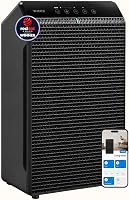
Winix vs Air Doctor: Which to Buy? (November 2026)
Air Doctor is the stronger pick for most people, and Winix is the better fit when you want a well-known brand at a lower price. In this Winix vs Air Doctor comparison, room size and filter cost decide more than brand names.
On this page (8 sections)
Air Doctor is the better choice for most people, and Winix is the better value pick when budget and brand familiarity matter more. In this Winix vs Air Doctor comparison, the deciding factors are room size, filter cost and what you need the purifier to trap.
Both brands sell purifiers across small, medium and large rooms. Neither one wins every matchup, so the useful question is which model fits your space and your air problems.
This guide walks through filtration, coverage, running costs and setup so you can choose with confidence. It also shows two Levoit models that compete directly in the same rooms.
Winix vs Air Doctor: which brand should you pick?
Pick Air Doctor if you want the widest filter range and stronger coverage per model; pick Winix if you want a familiar name at a lower price. The two brands aim at different buyers, and that gap decides most purchases.
Air Doctor positions its purifiers around multi-stage filtration that targets particles, odors and gases together. Winix leans on HEPA filtration with washable pre-filters and a simple line of room sizes.
Neither brand is a specialist in one room type. A small bedroom and a large open living area both have options from each maker.
The practical split is cost. Winix models usually sit in the budget and mid-range tiers, while Air Doctor sits higher.
That price gap buys more filtration stages and, in many models, higher CADR.
What the two brands sell
Winix sells a compact line of HEPA purifiers with a washable pre-filter and, on some models, a carbon filter for odors. The lineup covers bedrooms up to large rooms.
Air Doctor sells purifiers built around a multi-stage filter that combines a pre-filter, an activated carbon layer and a HEPA-style filter. Its larger models target big open spaces and heavy pollution.
Levoit competes directly with both, and the Levoit vs Winix comparison shows where the three brands overlap. That's worth reading if you're still narrowing the shortlist.
Where Winix makes sense
Winix fits buyers who want a proven HEPA purifier without paying premium prices. Its simple designs and widely available filters make upkeep easier to plan.
It also suits renters and guest rooms where a purifier moves between spaces. The lighter units are easier to carry from room to room.
Where Air Doctor makes sense
Air Doctor fits homes with mixed air problems: smoke, traffic fumes, cooking odors and seasonal pollen. Its multi-stage filters are built to handle several pollutant types at once.
It also suits larger open-plan rooms, where a higher CADR matters more than a small cabinet. If one purifier has to cover a living room and kitchen together, Air Doctor's bigger models are designed for that.
Winix vs Air Doctor side by side
The table below compares the two brands on the points that change the buying decision. Both offer HEPA-grade filtration, but they differ on filter design, coverage and running cost.
| Product | Best for | Room size | Smoke CADR | Filter setup | Our score |
|---|---|---|---|---|---|
| Levoit Vital 200S-P | large allergy rooms | Up to 1,875 sq ft | 250 CFM | Replaceable, several options | 8.9 |
| Levoit Core 300-P | quiet bedroom use | Up to 1,073 sq ft | 143 CFM | 8.6 |
Filtration stages
Winix purifiers use a washable pre-filter, a HEPA filter and, on some models, an activated carbon filter. The pre-filter catches hair and dust so the HEPA layer lasts longer.
Air Doctor's filters stack a pre-filter, an activated carbon layer and a HEPA-style filter in one cartridge. That design targets gases and odors as well as particles.
The difference matters most in homes with cooking fumes or wildfire smoke. Carbon filtration helps with gases that HEPA alone lets through.
Coverage and CADR
Air Doctor's larger models are built for big rooms, with high CADR figures to match. Winix covers small to large rooms but tends to sell more compact units.
Check the smoke CADR against your room size. A purifier needs enough airflow to cycle the room's air several times per hour to keep up with smoke or pollen.
Filter cost and replacement
Air Doctor filters cost more per change and often combine several stages into one cartridge. That simplifies replacement but raises the per-change price.
Winix filters are generally cheaper and easier to find. The washable pre-filter also cuts how often the HEPA layer needs replacing.
Noise and night use
Both brands offer sleep or low settings. Winix models are known for quiet low-speed operation in bedrooms.
Air Doctor units are larger and can be louder at high speed, though low settings stay usable at night.
Check the noise figure for the exact model rather than the brand. A bedroom purifier should run at a low decibel level on its night setting.
Which brand filters more pollutants?
Air Doctor filters a wider mix of pollutants, while Winix focuses on particles first. If smoke, fumes or odors are your main problem, the extra filtration stages earn their cost.
Particles like dust, pollen and pet dander are the easy part. A HEPA-grade filter catches most of them, and both brands handle that well.
Gases and odors are harder. Cooking, traffic exhaust and wildfire smoke carry VOCs and fine particles that a particle filter alone doesn't fully address.
Air Doctor's carbon stage is designed for that job. Winix adds carbon on some models, but its core strength is particle filtration.
When particle filtration is enough
If your air problem is seasonal pollen, dust or pet hair, a HEPA purifier covers it. Winix handles those jobs at a lower price.
A bedroom with a cat and a pollen allergy is the classic case. A HEPA purifier running through the night cuts the airborne load.
When you need gas and odor filtration
Choose Air Doctor when cooking smells linger, traffic is close, or wildfire smoke reaches your area. The carbon layer helps with the gases HEPA misses.
If you want the strongest particle performance in a large room, the Levoit Vital 200S-P is a direct rival worth checking against both brands. Its CADR figures and filter options make it a fair benchmark.
Which brand covers your room size?
Match the purifier's rated room size to the room you'll actually use, not the whole house. Both brands sell models for bedrooms and for open living spaces.
Air Doctor's bigger units are designed for large rooms. That makes them a fit for open-plan living areas and finished basements.
Winix offers compact units for bedrooms and mid-size models for living rooms. Its smaller units suit a single room rather than a whole floor.
Small bedrooms and guest rooms
A bedroom up to about 300 sq ft needs moderate airflow. A compact Winix or a small Air Doctor both work here.
Noise matters more than raw power in a bedroom. Look for a low sleep setting and the option to turn off display lights.
Large open living spaces
For a living room, kitchen and dining area that share air, choose a model rated for the combined square footage. That usually means a larger Air Doctor or a large-room model from a rival brand.
Placement also affects results. A purifier near the main air path does more than one tucked in a corner.
Our guide to the best air purifier for your home covers room sizing and placement.
Which brand costs less to run?
Winix costs less to buy and less to keep running in most cases. Air Doctor's higher price buys more filtration, so the value depends on your air problems.
Energy use follows fan speed. A purifier running at low speed in a bedroom uses far less than the same unit at high speed in a smoky room.
Filter replacement is the bigger ongoing cost. Air Doctor's multi-stage cartridges cost more per change.
Winix's washable pre-filter and simpler filter stack lower the yearly bill.
Upfront price tiers
Winix sits in the budget and mid-range tiers. Air Doctor sits in the premium tier.
That gap doesn't mean Air Doctor is overpriced. You're paying for more filtration stages and, in larger models, more coverage.
Filter costs over a year
Estimate the yearly filter bill before you choose. Multiply the filter price by the number of changes you'll make in a year.
A home with pets or smoke needs more frequent changes than a clean bedroom. Over several years, the gap between the two brands grows.
Which brand is easier to live with?
Winix is simpler to set up and move, while Air Doctor units are larger and need more floor space. Day-to-day use comes down to size, controls and placement.
Both brands use standard controls: fan speed, a filter-change indicator and, on some models, an auto mode. Neither asks much of you after setup.
The cabinet size is the real difference. A large Air Doctor takes floor space in a living room.
A compact Winix fits beside a bed or in a corner.
Size and placement
Measure the spot before you buy. Leave clearance around the unit so air can move freely in and out.
Don't block the intake or exhaust against a wall or sofa. A purifier pushed into a corner cleans less air than one in the open.
Controls and smart features
Some models in both lines offer auto mode, timers and app control. Check the exact model if smart features matter to you.
The Core 300-P, for example, has no auto mode. Its sibling, the Core 300S-P, adds smart connectivity.
That's the kind of detail to confirm before ordering.
Who should buy which?
Buy Air Doctor for heavy pollution and large rooms; buy Winix for bedrooms and tighter budgets. Your air problem and room size make the call.
Air Doctor fits homes near busy roads, areas with wildfire smoke, or kitchens where cooking odors spread. Its carbon stage earns its keep there.
Winix fits a first purifier, a bedroom, or a rental where price and simplicity matter. It handles dust, pollen and pet hair well.
Choose Air Doctor if
- Your home faces traffic fumes, smoke or lingering cooking odors.
- You need one purifier for a large open-plan space.
- You want the widest filter range within one brand.
Choose Winix if
- You want a proven HEPA purifier at a lower price.
- A bedroom or single room is the main target.
- You prefer cheap, easy-to-find replacement filters.
If you're comparing more brands, the Winix vs Blueair comparison shows how Winix stacks up against another premium name. And the Winix 5520 review covers one of its larger models in detail.
Where Levoit fits in this decision
Levoit sits between the two on price and matches both on filtration options. The Vital 200S-P covers large rooms with high CADR figures and several filter types.
The Core 300-P is a compact, quiet bedroom purifier at a budget-friendly price. Both carry AHAM Verifide certification for tested performance.
Our score weighs specs, features and buyer needs against what you're shopping for. The Vital 200S-P leads here on coverage and filter choice, while the Core 300-P wins on quiet bedroom use.
Winix vs Air Doctor: the verdict
For most people, Air Doctor is the winner in this Winix vs Air Doctor matchup. Its multi-stage filtration and larger coverage suit homes with mixed air problems.
Pick Winix when the budget is tight and a bedroom or single room is the target. Its HEPA filtration and cheaper filters cover the basics well.
If you want a middle path, the Levoit Vital 200S-P matches both brands on large-room coverage and filter options. Start with your room size, then choose the filter design that matches your air.
Measure your room and note your main air problem before you order. That one step decides more than the brand name on the cabinet.
Frequently asked questions
Is Air Doctor better than Winix?
Air Doctor is the stronger pick for most people because its filter line targets a wider range of pollutants. Winix still makes sense when you want a familiar brand at a lower price.
Compare the CADR and filter cost for the exact models, since both brands sell purifiers across several room sizes.
What CADR should I look for in an air purifier?
Match CADR to your room size, and aim for a smoke CADR at least two-thirds of the room's floor area in square feet. A higher number means faster cleaning.
For a 300 sq ft room, a smoke CADR around 200 CFM or more is a reasonable target.
How often do air purifier filters need changing?
Most purifier makers recommend a filter change every 6 to 12 months, depending on use and air quality. Run the purifier daily in a smoky or pet-heavy home and check the filter sooner.
Levoit recommends every 6 to 8 months for its filters.
Do air purifiers help with mold and musty rooms?
A purifier with a HEPA-grade filter traps airborne mold spores, but it won't fix the source. Find and remove the moisture feeding the mold first.
A purifier helps most after the leak or damp patch is repaired and the room is drying out.
Can I use a large-room purifier in a small bedroom?
Yes, and it will clean the air faster than a small model. The trade-offs are size, weight and often noise at higher speeds.
A large unit on a low fan setting can work in a bedroom, but check the noise figure for sleep mode before you buy.