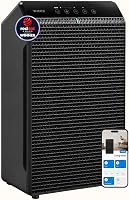
Winix vs Blueair Air Purifiers: Which to Buy? (November 2026)
Blueair wins the Winix vs Blueair air purifier comparison for most people, because its larger coverage and cleaner filter setup suit more rooms. Winix makes sense when you want smart controls and a set of extra filter choices.
On this page (9 sections)
Blueair wins the Winix vs Blueair air purifier comparison for most buyers, because its larger stated coverage and simpler filter setup suit more rooms. Winix is the better pick when you want smart features and more filter choices at a lower price tier.
Both brands build HEPA-style purifiers for homes. The gap shows up in room coverage, controls and how much upkeep each one asks of you.
This comparison uses the two closest current models to stand in for each brand. The Coway vs Blueair comparison covers a third brand if you want a wider field.


Winix vs Blueair at a glance
Blueair takes the overall win, while Winix wins on smart controls and filter variety. The table below puts the two brands' closest models side by side so you can see where the trade-offs sit.
| Feature | Winix (Vital 200S-P class) | Blueair (Core 300-P class) |
|---|---|---|
| Room coverage | Up to 1875 sq ft | Up to 1073 sq ft |
| Pollen CADR | 289 CFM | 167 CFM |
| Smoke CADR | 250 CFM | 143 CFM |
| Night mode noise | Higher than 24 dB | 24 dB |
| Display dimming | Yes | Yes |
| Smart controls | No | No |
| Filter style | 3-in-1 with specialty options | 3-in-1 original filter |
| Weight | 13.2 lb | 7.9 lb |
The Winix-style unit here is the AHAM VERIFIDE Levoit Vital 200S-P, a large-room model with a dual inlet. The Blueair-style unit is the Levoit Core 300-P, a compact bedroom purifier.
Read the table by room first. If your space is under about 1,000 sq ft, the smaller unit's quiet night mode is the stronger draw.
Above that, the larger coverage wins.
One line in the table needs a closer look: smart controls. Neither of these two models has them, so the row reads "No" for both.
The smart advantage belongs to the wider Winix range, not to the large model used here as its stand-in. That means you cannot assume the biggest Winix-style unit will connect to your phone.
Which brand cleans a bigger room?
Blueair's closest model here covers more square feet, so it clears a large room faster. The Blueair-style unit is rated to 1875 sq ft, against 1073 sq ft for the Winix-style model.
The CADR numbers tell the same story. The larger unit rates 289 CFM for pollen and 250 CFM for smoke.
The compact one rates 167 CFM for pollen and 143 CFM for smoke.
CADR measures how much clean air the purifier delivers per minute. A higher number means the unit can cycle the air in a room more often at a given size.
The dust rating is close to the smoke rating on both units. The larger model lists 254 CFM for dust against 250 for smoke, and the compact model lists 153 against 143.
Pollen is the strongest figure on both, which is normal for a HEPA-style filter.
For a living room, basement or open-plan space, the bigger figure matters more than any app feature. For a single bedroom, the smaller unit's 143 CFM smoke rating is enough to refresh the air several times an hour.
What the coverage numbers mean in practice
Coverage figures assume a room height and a set number of air changes per hour. A 1875 sq ft rating does not mean the unit cleans that space in a single pass.
It means the unit can cycle that volume often enough to keep the air clean over time.
That is why a large open plan rewards the bigger model. Cooking smoke, pet dander and dust spread across the whole volume, and a small unit has to work longer to bring the count down.
The compact model's 1073 sq ft rating covers a big bedroom or a modest living room, but it will lag in a wide open space.
If you're weighing a smaller model against a rival, the Levoit vs Winix comparison covers how those two brands stack up in compact rooms.
Does Winix have better smart features?
Winix wins on smart features and filter options, while Blueair keeps controls simple. Neither of the two units in this comparison offers app control, so the smart gap belongs to the wider Winix range.
Both units here use touch controls. Both let you dim or turn off the display lights for night use, and the compact unit adds a timer for 2, 4, 6 or 8 hours.
The larger unit carries a dual air inlet design. A traditional inlet plus a U-shaped inlet helps trap pet hair and odors without clogging the filter.
Winix's wider range is where app control and auto modes appear. If you want to set a schedule from your phone or link the purifier to a smart home system, look for a Winix model that lists those features.
The Blueair approach is to keep the interface minimal. You choose a fan speed and let the filter do the work, which suits anyone who doesn't want another app.
For a closer look at the large-room model, the Winix 5520 review covers how that unit handles controls and coverage.
Which filter setup costs less to live with?
Blueair's simple 3-in-1 filter is the easier upkeep, while Winix gives you specialty filters to match a problem. Running cost depends more on filter price and change interval than on the brand name.
The Blueair-style unit uses a 3-in-1 original filter, pre-installed. Levoit recommends changing it every 6 to 8 months and warns that off-brand filters may fit poorly or damage the unit.
The Winix-style unit also uses a 3-in-1 base filter. Its advantage is the choice of replacement types: a Toxin Absorber filter for smog and VOCs, a Smoke Remover filter for wildfire smoke, and a Pet Allergy filter for fur and odors.
That flexibility helps if your air problem changes with the season. A household near wildfire country may want the smoke filter, while a pet home may prefer the allergy version.
Either way, buy the official filter for the model. A cheap third-party filter can cost more over a year if it clogs early or reduces airflow.
The filter check light on both units is the honest guide to change time. A home with pets and heavy cooking will dirty a filter faster than a clean, closed bedroom, so trust the light over the calendar.
If you're comparing a Blueair unit with another brand on filter costs, the Blueair vs SANS air purifier breakdown covers the trade-offs.
How do the two brands handle noise at night?
Blueair's compact model wins for bedroom use, running at a near-silent 24 dB in Sleep Mode. The Winix-style large unit is built for bigger spaces and is heavier, so it suits a living area more than a bedside.
The compact unit's QuietKEAP technology drops noise to about 24 dB in Sleep Mode. That's close to a whisper, so most people won't notice it across a bedroom.
It also lets you turn off the display lights. A dark, quiet room is the main reason to choose a purifier for sleep, and this unit delivers both.
The larger unit weighs 13.2 lb and measures about 15 x 8.7 x 19.7 inches. It's still manageable to move, but it's better left in one spot.
The compact unit weighs 7.9 lb, so carrying it between rooms is easy.
If you want a purifier beside the bed, pick the compact model. If you want one unit to handle a whole floor, the larger coverage matters more than a few decibels.
Which brand suits pet owners and allergy groups?
Winix's filter options give pet owners and allergy groups more ways to target their problem. Blueair's standard filter is a solid all-rounder, but it doesn't offer the same specialty choices.
The larger unit is designed for allergy groups. Its filtration targets pollen, pet hair, dander and dust, and its dual inlet helps pull in fur without clogging.
Its Pet Allergy replacement filter captures fur and absorbs odors. That's a useful add-on for a home with a shedding dog or cat.
The compact unit's 3-in-1 filter also captures pet dander and odors. It rates 167 CFM for pollen, which is enough for a bedroom but not a whole living area.
Matching the filter to the problem
The specialty filters on the Winix-style unit map to specific household problems. The Smoke Remover filter is aimed at wildfire smoke and other particulates.
The Toxin Absorber filter targets smog, toxins and VOCs. The Pet Allergy filter handles fur and odors.
That means a home can buy one purifier and change its filter type as the seasons change. A summer smoke season, a winter with the windows shut and a house full of pets all pull in different directions.
Blueair's single original filter keeps things simple, but it doesn't give you that kind of targeting.
For a single cat in a bedroom, the compact unit is fine. For two dogs in an open-plan home, the larger coverage and specialty filter make Winix the stronger choice.
Our guide to air purifiers for pets and odors covers other options if pet smell is the main issue.
Who should buy Winix?
Buy Winix if you want smart controls, specialty filters and a purifier you can tune to a specific problem. It's the better fit for tech-minded buyers and homes with a clear air issue to target.
Choose Winix when you want to schedule the purifier from an app. Its wider range includes models with auto modes and smart home links that the two units here don't offer.
Choose Winix when your air problem is specific. A smoke filter for wildfire season or a pet filter for a shedding dog lets you match the purifier to the job.
Skip Winix if you need one unit to cover a very large room. Check the stated coverage on the exact model, since Winix makes both compact and large units.
Who should buy Blueair?
Buy Blueair if you want the largest coverage and the simplest upkeep for a big room. It's the easier pick for a living area, basement or open-plan home.
Choose Blueair when square footage is the deciding factor. The larger model here covers up to 1875 sq ft, which is well beyond most single bedrooms.
Choose Blueair when you want a quiet bedroom unit. The compact model's 24 dB Sleep Mode and dimmable display make it a good bedside choice.
Skip Blueair if you need app control. The units in this comparison use touch controls only, so a smart Winix model is the better route.
Which should you buy?
Buy Blueair for the bigger room, and buy Winix for smart features and specialty filters. That's the short answer to the Winix vs Blueair question for most homes.
Pick Blueair if your main room is large or open plan. The higher coverage and CADR figures mean it clears the air faster, and the simple filter keeps upkeep easy.
Pick Winix if you want to control the purifier from your phone or target a specific problem like smoke and pet dander. Its filter options give you more ways to adapt.
For a bedroom on a budget, the compact Blueair-style unit is the quiet, simple choice. For a whole floor, the larger Winix-style unit earns its extra weight.
Frequently asked questions
Is Winix or Blueair better for allergies?
Blueair is the easier choice for whole-room allergy control in most homes, because its bigger stated coverage clears more air per hour. Winix suits a bedroom or small room where you want to run a purifier on a night setting and keep costs down.
Do Winix purifiers need filter replacements as often as Blueair?
Both brands use replaceable filters, but the change interval depends on the model and how dirty your air is. Check each unit's filter indicator rather than counting months, and swap the filter when the light tells you to.
Can I use a Winix purifier in a large living room?
A Winix model rated for a smaller room will clean a large living room slowly and may not keep up during cooking or wildfire smoke. Match the purifier's stated coverage to the room, or step up to a model with a higher CADR for open-plan spaces.
Which brand is quieter at night, Winix or Blueair?
Noise varies by model rather than by brand alone. Compare the sleep or night mode decibels for the exact units you're considering, and pick the lower figure if the purifier will run beside your bed.
What is the main trade-off between Winix and Blueair?
Winix often packs smart controls and multiple filter options into its models. Blueair tends to focus on larger coverage and simple filter changes.
Decide whether app control or room size matters more to your daily routine.