Levoit vs Dyson Air Purifiers: Which to Buy? (November 2026)
Pick Levoit for value and quiet bedroom cleaning; pick Dyson for design and airflow flexibility. In this Levoit vs Dyson air purifier comparison, the Levoit Air Purifiers for Bedroom Home Pets is our top pick for most readers.
On this page (8 sections)
Pick Levoit for value and quiet bedroom cleaning; pick Dyson for design and airflow flexibility. For most readers the Levoit vs Dyson air purifier decision comes down to price tier and how much design matters, because Levoit's models already carry AHAM VERIFIDE testing.
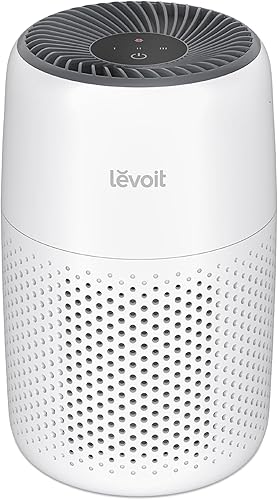
The Levoit Air Purifiers for Bedroom Home Pets is our top pick overall. It's compact, quiet enough for a nightstand and filters smoke, allergens and pet dander without a premium price tier.
Dyson's purifiers sit at the premium end of the market and lean on design and airflow features. This comparison weighs what each brand actually delivers so you can choose in a few minutes.

Levoit vs Dyson at a glance
Levoit wins on value and quiet operation; Dyson wins on design and multi-directional airflow. For most rooms, the Levoit specs on this page cover the basics a buyer needs.
We compared the three Levoit models in the product list against the features buyers expect from a Dyson purifier. Every Levoit here carries the AHAM VERIFIDE seal.
AHAM stands for the Association of Home Appliance Manufacturers, an ANSI-accredited group. The seal means a model was independently tested for air cleaning performance, safety and energy efficiency against strict standards.
That matters because it gives you a tested number to compare rather than a marketing claim.
The Core Mini-P covers a desktop or nightstand. The Core 300-P covers a bedroom or home office.
The Vital 200S-P handles large rooms up to 1875 ft². Each one is a different size class, so the brand comparison starts with which room you need to clean.
Dyson purifiers are known for a bladeless loop design and a premium price tier. Buyers who care about a purifier matching the room's look often weigh Dyson first.
How the two brands compare side by side
The core difference is the tier each brand serves. Levoit builds budget and mid-range purifiers around tested filtration.
Dyson builds premium purifiers around design and airflow.
| Point | Levoit | Dyson |
|---|---|---|
| Price tier | Budget to mid-range | Premium |
| Filtration | Pre-filter plus HEPA-grade main filter | HEPA and carbon filtration |
| Certification | AHAM VERIFIDE on listed models | Varies by model |
| Noise | Sleep mode as low as 24 dB | Higher airflow can raise noise |
| Smart features | Varies; Core 300-P is manual | App and remote controls common |
| Size range | Desktop to large room | Floor-standing tower |
| Best for | Most bedrooms and living rooms | Design-led homes |
The Levoit Core 300-P delivers a CADR of 143 CFM for smoke and 167 CFM for pollen. That's enough to refresh a 222 ft² room about 4.8 times per hour.
The same numbers mean a 1,073 ft² room gets one full air change every hour.
CADR is the Clean Air Delivery Rate, and it's the number worth comparing when you shop across brands. A higher smoke CADR means more air pushed through the filter per minute, which matters more in a smoky kitchen or a wildfire season.
The Vital 200S-P steps up to a 250 CFM smoke CADR and rooms up to 1875 ft². That's the model to pick for an open-plan space or a pet household.
Dyson's strength is its airflow design. Its purifiers project air around the room rather than straight up, which can suit a large open space.
The trade-off is the price tier and, often, a higher noise floor at full speed.
Which brand is better for bedrooms?
Levoit is the better bedroom brand because its sleep modes are tuned for low noise. The Core 300-P runs at 24 dB in sleep mode, which is close to near-silent.
The Core Mini-P runs at 27–45 dB across its speed range and drops to a whisper-level sleep mode. Its auto-off display keeps light out of the room.
Both Levoit models let you kill the display lights. That matters in a bedroom where any glow is distracting.
Sleep mode and the noise numbers explained
A decibel is a measure of sound pressure, and the scale is not linear. A drop of a few dB is a real change to the ear, so a purifier at 24 dB in sleep mode sits well below normal conversation.
The Core 300-P reaches that 24 dB floor in Sleep Mode using QuietKEAP technology. Its normal running range is higher, but you only hear that when the fan spins up for a dusty room or a fast clean.
The Core Mini-P's 27–45 dB range spans a quiet nightstand setting up to a brisk daytime clean. On a desk beside you, the top end is noticeable but not disruptive.
Dyson purifiers push more air at their top speeds, and higher airflow usually means more noise. In a bedroom, that's the point to weigh: do you want a purifier you forget is running, or one that cleans fast and gets loud doing it?
Placement and light control in a bedroom
The Core Mini-P measures 6.3 x 10.24 x 6.3 inches and weighs 2.2 pounds. That's small enough for a nightstand without crowding a lamp and a glass of water.
It also includes a fragrance sponge for aromatherapy. Use 2 to 3 drops of essential oil only, because excess oil can overflow and dissolve plastic parts.
If your bedroom doubles as a home office or pet room, the air purifier for home guide explains how room size and use change the pick. For a pure bedroom, the Core 300-P is the strongest fit here.
Which handles large rooms and pets better?
The Levoit Vital 200S-P is the large-room and pet pick. Its 250 CFM smoke CADR and 1875 ft² coverage make it the only model here built for an open floor plan.
The full CADR set backs that up: 250 CFM for smoke, 254 CFM for dust and 289 CFM for pollen. Pollen is the highest of the three, which fits its stated focus on allergy groups.
Pet households get a specific advantage: a traditional air inlet plus a U-shaped inlet. The second intake traps airborne pet hair and odors without clogging the main path.
Anyone who has pulled a mat of fur off a single-intake purifier knows why that matters.
The Vital 200S-P also offers replacement filter options. The Toxin Absorber targets smog and VOCs.
The Smoke Remover targets wildfire smoke and other particulates. The Pet Allergy filter captures fur and absorbs odors.
That filter menu is the closest thing here to matching a purifier to a specific air problem. A home near a highway leans toward the Toxin Absorber.
A home in a wildfire zone leans toward the Smoke Remover. A home with two shedding dogs leans toward the Pet Allergy filter.
A Dyson tower suits a large room too, and its airflow reach can be an advantage in an open space. The decision comes down to whether you want filter options tuned to pets and smoke or a design-forward tower.
If you're comparing brand options more broadly, our Levoit vs Winix comparison covers a budget rival with its own strengths.
How do smart features and controls compare?
Dyson generally leads on smart controls; Levoit splits its lineup between smart and manual models. Check the exact model before assuming app control.
The Core 300-P does not include Auto Mode. It requires manual fan speed control.
It does offer a display-off option and a timer for 2, 4, 6 or 8 hours.
The Core Mini-P offers an auto-off display and sleep mode but no smart app control. The Vital 200S-P is sold as a smart purifier.
Who benefits from app control and who does not
Dyson purifiers commonly include app control and a remote. If you want to set schedules from your phone or check air quality remotely, that's a real advantage for Dyson.
A remote also helps when the unit sits across a large room.
Levoit's manual models suit a different buyer. Set a fan speed, switch off the display and forget it.
There's no account to set up, no app to update and no Wi-Fi to keep working.
The Core 300-P still has a filter check indicator, so you know when a replacement is due without tracking the calendar. The Core Mini-P's auto-off display handles the light problem on its own.
The Core 300-P uses 120V power and is meant for US use only. If you plan to move it abroad or use it on a travel voltage setup, that's a limit to know before you buy.
Which brand costs less to own?
Levoit wins on cost to own at every tier, from the buy price to the replacement filters. The budget and mid-range price tiers keep the entry cost low.
Levoit replacement filters are sold at budget-friendly prices. The Core 300-P uses official Levoit filters, and the maker recommends changing them every 6 to 8 months.
Levoit also warns that off-brand filters may fit poorly and can damage the purifier, so factor official filters into the running cost.
The Vital 200S-P offers three filter types so you can match the filter to your air. That flexibility helps, but each replacement adds up over years.
Pick one filter type for your main problem and stick with it rather than switching every cycle.
Dyson purifiers sit in a premium price tier. The buy price is higher, and replacement filters are priced accordingly.
For a buyer on a budget, Levoit leaves more room for filter changes over the purifier's life.
A quick way to compare: multiply the filter cost by two changes a year and add it to the buy price over a few years. On that math, the cheaper purifier with cheaper filters usually stays ahead.
Our Levoit vs Shark comparison looks at another budget rival if cost is your main filter.
Which brand fits your room and setup?
Levoit covers more room sizes and placements; Dyson is a floor-standing tower. Pick by where the purifier will sit and how much floor space you can spare.
The Core Mini-P measures 6.3 x 10.24 x 6.3 inches and weighs 2.2 pounds. It sits on a desk, nightstand or kitchen counter without crowding the surface.
The Core 300-P is a mid-size floor or table unit. It's light enough at 7.9 pounds to move between rooms when you need it.
Its footprint is 8.7 by 8.7 inches and it stands 14.2 inches tall.
The Vital 200S-P is 14.96 x 8.66 x 19.69 inches and weighs 13.2 pounds. It's the one model here that needs real floor space.
The Vital 200S-P also takes a 12V battery, so plan for that in your setup.
A Dyson tower takes floor space too, and its design often becomes part of the room. If you want the purifier to blend in or make a statement, Dyson fits that brief.
If you want a small unit that disappears on a shelf, Levoit wins.
Matching the purifier to the room
A desktop unit like the Core Mini-P suits a home office, a small bedroom or a kitchen corner where odors build up. It cleans the air around it rather than a whole floor.
The Core 300-P is the middle option. It handles a standard bedroom or a living room and can follow you from room to room.
Its manual controls are simple enough for a guest room or a kid's room.
The Vital 200S-P is the one to choose when the space is open. A living room that flows into a kitchen and dining area, or a basement rec room, is its natural home.
Its 1875 ft² coverage is sized for that kind of footprint.
Dyson's floor-standing towers fit the same large-space brief but carry a premium price. The choice between the two at the large end is mostly design and airflow versus cost and filter options.
Which brand should you buy?
Buy Levoit for most homes; buy Dyson if design and smart control matter more than price tier. The Levoit vs Dyson air purifier choice is less about filtration quality and more about what you'll pay for.
The Levoit Air Purifiers for Bedroom Home Pets is the best overall pick. It's quiet, certified and small enough for a nightstand.
It handles smoke, allergens, pet dander and odors. The Core 300-P adds a 24 dB sleep mode and 99.97% fine-particle filtration for a full bedroom.
The Vital 200S-P is the large-room and pet pick. Its 250 CFM smoke CADR and dual inlets make it the strongest fit for an open-plan pet home.
Dyson suits buyers who want a design-led tower with app control and airflow reach. If you'll pay the premium for those features, it's a reasonable buy.
If you want tested filtration at a budget or mid-range price tier, Levoit is the smarter call.
If you're still weighing brands, the Coway vs Dyson comparison covers another premium alternative before you commit.
Frequently asked questions
Is Levoit better than Dyson for air purification?
Levoit is the better pick for most homes because its models deliver AHAM VERIFIDE performance at budget and mid-range price tiers. Dyson suits buyers who want design-led airflow flexibility and will pay more for it.
What does AHAM VERIFIDE mean on a Levoit purifier?
AHAM VERIFIDE is a seal from the Association of Home Appliance Manufacturers, an ANSI-accredited group. It means the purifier was independently tested for air cleaning performance, safety and energy efficiency against strict standards.
Which Levoit purifier is best for a bedroom?
The Core 300-P is the best bedroom pick here, running at 24 dB in sleep mode with a display you can turn off. The Core Mini-P also works on a nightstand, and its sleep mode runs quieter than a whisper.
Do Levoit purifiers handle pet hair and smoke?
The Vital 200S-P is the strongest pet and smoke pick, with a CADR of 250 CFM for smoke and dual air intakes that trap pet hair without clogging. The Core Mini-P also captures smoke particles and neutralizes odors.
How long do Levoit purifier filters last?
Levoit recommends replacing the filter every 6 to 8 months. The Core 300-P has a filter check indicator, so you don't have to track the date yourself.


