Coway vs Dyson Air Purifiers: Which to Buy? (November 2026)
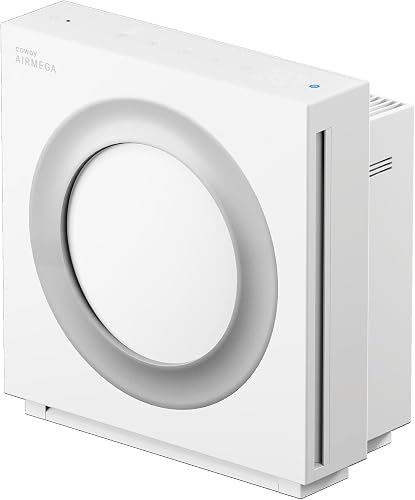
For most rooms, buy the Coway Airmega AP-1512HH. In this Coway vs Dyson air purifier comparison, the Coway cleans up to 1,748 sq. ft. in 60 minutes with a four-stage HEPA system and a filter-change alert, while Dyson models cost more and center on app controls and fan features.
On this page (8 sections)
For most rooms, buy the Coway Airmega AP-1512HH. In this Coway vs Dyson air purifier comparison, the Coway cleans up to 1,748 sq. ft. in 60 minutes with a four-stage HEPA system and a filter-change alert, while Dyson models cost more and center on app controls and fan features.
That does not make Dyson a bad choice. It makes Dyson a different one.
Coway builds purifiers around filtration, coverage and simple controls. Dyson builds air treatment machines that also cool you, connect to an app and look like furniture.
This comparison lines up the two brands on the points that decide a purchase: filtration, room coverage, running costs, controls and upkeep. Two Coway models anchor the discussion, the Airmega AP-1512HH and the newer Airmega Mighty2.
Dyson's current purifier range fills in the other side.

Coway vs Dyson air purifier: the quick verdict
Pick Coway if clean air per dollar and clear coverage numbers matter most. Pick Dyson if you want app control, a fan function and a design object in the room.
The Coway Airmega AP-1512HH is the pick for most readers. It states coverage of up to 1,748 sq. ft. in 60 minutes and runs a four-stage system: a washable pre-filter, a deodorization filter, a bipolar device and a HEPA filter.
The HEPA stage reduces 99.97% of 0.3 micron particles, per Coway.
The Coway Airmega Mighty2 takes the same idea further. Its coverage reaches 1,800 sq. ft. in 60 minutes, or 900 sq. ft. in 30 minutes.
It adds a laser sensor that reads PM1, PM2.5 and PM10 and shows the numbers, plus filter life as a percentage.
A Dyson purifier is the better fit when you want one machine for air and a gentle breeze. Dyson's purifier fans combine filtration with a fan, app scheduling and a polished look.
That package costs more than a Coway and rarely states the same headline coverage.
When Dyson makes more sense than Coway
Dyson earns its price in a few situations. A home office or bedroom where you want a fan in summer and filtered air year round is one.
A living room where the machine will sit in view is another. And a household that already runs smart-home routines may like Dyson's app.
If none of those apply, the money is better spent on a Coway with a larger stated coverage figure. Our guide to picking an air purifier for home walks through room size and filtration needs in more detail.
The two brands side by side
The table below compares what each brand is built to do. Coway leads on stated coverage and filter simplicity.
Dyson leads on features around the filter.
| Feature | Coway (Airmega AP-1512HH) | Dyson (purifier range) |
|---|---|---|
| Main job | Room air filtration | Air filtration plus fan and app control |
| Stated coverage | Up to 1,748 sq. ft. in 60 minutes | Varies by model |
| Filtration stages | Washable pre-filter, deodorization filter, bipolar device, HEPA | HEPA plus activated carbon on most models |
| Controls | On-unit buttons, auto mode, Eco mode | On-unit, remote and app on many models |
| Filter tracking | Indicator light when a change is due | Filter life shown in the app |
| Typical price tier | Mid-range | Premium |
| Best fit | Bedrooms and living rooms | Rooms where looks and app control matter |
The AP-1512HH's coverage figure is the one to keep in mind. It is a 60-minute figure for the full 1,748 sq. ft., which means a smaller room gets several air changes per hour.
That is the number that matters for a bedroom or a normal living room.
Dyson's specs vary more from model to model. Some Dyson purifiers target small rooms and some target larger open spaces.
Check the coverage figure for the exact Dyson unit, not the brand as a whole.
Which one filters the air better?
Both brands use HEPA filtration, so the difference is in the stages around the filter. Coway spells out its four-stage system.
Dyson pairs HEPA with activated carbon on most models.
The AP-1512HH's four stages each do a job. The washable pre-filter catches hair and dust so the later filters last longer.
The deodorization filter targets odors and gases. The bipolar device helps particles clump so the HEPA stage can catch them.
The HEPA filter then reduces fine particles like pollen and pet dander.
Coway says the HEPA filter meets IEST-RP-CC007 standards. It also says its filters were tested for reducing allergens and odors.
Those are lab results, so your room may differ.
Dyson's filter setup is simpler to describe. A HEPA layer catches particles and an activated carbon layer handles gases and odors.
Many Dyson models add a formaldehyde sensor and a catalytic filter aimed at that gas. The brand's strength is the sensor suite and the app readout, not a longer filter stack.
For most homes, either approach cleans the air well. The Coway's extra pre-filter is a practical plus, because a washable stage you can rinse saves money over the life of the machine.
Our comparison of Coway vs Blueair shows the same pattern against another filter-focused brand.
What the filter data actually says
Coway publishes specific claims for its filters. The AP-1512HH's HEPA stage reduces 99.97% of 0.3 micron particles.
The Mighty2's HEPA and Active Carbon Max2 filter does the same and also reduces more than 99.5% of volatile organic compounds such as NH3 and CH3CHO.
Dyson publishes HEPA and carbon claims per model. Read them the same way you read Coway's: as lab results under test conditions.
A purifier's real-world performance depends on the room, the fan speed and how well the air circulates.
Room coverage: how big a space will each brand clean?
Coway states large coverage figures for both models here; Dyson's coverage depends on the model you pick. Match the figure to your room's size, not the brand's reputation.
The AP-1512HH is designed to clean up to 1,748 sq. ft. in 60 minutes. That is larger than most bedrooms and living rooms.
In a 300 sq. ft. bedroom it will cycle the air many times an hour, which is what you want when someone has allergies or pets.
The Mighty2 covers up to 1,800 sq. ft. in 60 minutes, or 900 sq. ft. in 30 minutes. Its CADR figures are 242 for dust, 240 for smoke and 249 for pollen.
CADR is a useful cross-check because it measures clean air delivered, not just the room size the brand claims.
Dyson coverage figures are smaller on most models. The brand positions its purifiers for specific rooms rather than whole floors.
That is fine for a bedroom or a study, but a large open-plan space may need a Coway or two machines.
Matching coverage to your room
Measure the room's floor area first. A 12 by 15 ft. bedroom is 180 sq. ft.
A 20 by 25 ft. living room is 500 sq. ft. Compare those numbers with the purifier's stated 60-minute coverage, then aim for a machine that can cycle the room's air several times an hour.
Open doorways and high ceilings make the job harder. So does a room with pets or smoke.
In those cases, pick the model with the larger coverage figure and run it on a higher fan speed. Our roundup of the best air purifiers under 200 covers smaller-room options if your space is modest.
Controls and daily use: which is easier to live with?
Coway keeps controls on the machine; Dyson adds app and remote control. The better choice depends on whether you want to adjust the purifier from your phone.
The AP-1512HH runs an auto mode. It monitors air quality and adjusts the fan to match.
A colored LED shows how clean or dirty the air is, and you can turn the light off for sleeping. That is a simple, effective loop for a bedroom.
The Mighty2 adds more feedback. Its MegaScan laser sensor reads PM1, PM2.5 and PM10 and shows the numbers.
Smart mode adjusts airflow and switches to Eco mode when the air is clean. A light sensor triggers sleep mode in a dark room, with noise as low as 19 dB.
Dyson's advantage is connectivity. Many Dyson purifiers connect to an app for scheduling, fan speed and filter status.
Some ship with a remote. You can set a routine and forget the machine, which suits people who like smart-home control.
Neither approach is wrong. If you want to press a button and walk away, Coway is enough.
If you want to check the air quality from the sofa or set a nightly schedule, Dyson earns its keep.
Noise and night-time use
Coway's Mighty2 is the quieter of the two Coway models here, at 19 dB in sleep mode. The AP-1512HH has a light-off mode for sleeping, and its auto mode keeps the fan low when the air is clean.
Dyson publishes noise figures per model and offers a night mode on many units. Compare the exact models if a bedroom is the main room.
Running costs and filter upkeep
Coway's washable pre-filter and clear filter alerts keep upkeep simple. Dyson's filters cost more and its app-based tracking adds convenience rather than savings.
The AP-1512HH has a filter indicator that tells you when the filters need replacing. It also flags when the pre-filter needs cleaning.
The pre-filter is washable, so you rinse it instead of buying a new one. That leaves the deodorization and HEPA filters as the recurring cost.
The Mighty2 goes further. Its display shows the remaining life of the pre-filter and the Max2 filter from 100% down to 0%.
When the Max2 filter hits zero, you replace it. The pre-filter just needs a wash.
It runs at a maximum of 56W, which Coway says is 20% less energy than the previous model.
Dyson filters are replaced as a unit on most models. The app shows filter life, which is handy, but the filter itself costs more than a Coway's.
Over several years, the gap in filter spend can add up.
Energy use in plain terms
The Mighty2's 56W maximum matters if you run a purifier all day. At full speed it uses about as much power as a small fan.
The AP-1512HH's draw is not stated in the same way, but its Eco mode lowers the fan when the air is clean. Either Coway will cost less to run than a Dyson purifier fan at high speed for the same hours.
Who should buy which?
Buy Coway for filtration value and large stated coverage. Buy Dyson for app control, a fan function and a design-led look.
The right pick follows your priorities, not the brand name.
Buy the Coway Airmega AP-1512HH if…
You want a proven HEPA purifier for a bedroom or living room. Its 1,748 sq. ft. coverage figure is generous for a normal room.
Auto mode and the light-off setting make it easy to live with. The washable pre-filter and filter alert keep upkeep predictable.
It is the best value in this comparison.
Buy the Coway Airmega Mighty2 if…
You want more feedback and a newer sensor. The Mighty2 shows particle counts and exact filter life, covers up to 1,800 sq. ft. in 60 minutes and runs as low as 19 dB.
It costs more than the AP-1512HH but earns it with the display and quieter sleep mode. It suits a large open room or a bedroom where quiet matters.
Buy a Dyson purifier if…
You want one machine for air and a fan. Dyson's purifier fans move air across the room and double as a cooling fan in summer.
The app adds scheduling and filter tracking. The look is a real factor too, since a Dyson is designed to be seen.
If those features matter more than coverage per dollar, Dyson is the pick.
The verdict: which brand wins?
Coway wins this comparison for most buyers. The Coway vs Dyson air purifier decision comes down to what you pay for.
Coway gives you more stated coverage and a simpler filter system for less money.
The AP-1512HH is the overall winner, and the Mighty2 is the better pick for a large room or a quiet bedroom.
Choose Dyson when app control, a fan function and a design piece are part of what you want from a purifier. Those are real benefits, and they are why Dyson sells.
They just are not the same as more clean air per dollar.
If your room is small or your budget is tight, our roundup of the best air purifiers under 200 is the next stop. For a broader shortlist across room sizes, see the best air purifier for your home guide.
And if you are still weighing brands against each other, the Blueair vs SANS air purifier comparison follows the same decision framework.
Frequently asked questions
Is Coway better than Dyson for air purification?
Coway is the better buy for most rooms because its HEPA models state large coverage figures and sell at lower prices than Dyson purifiers. Dyson adds app control, fan features and a design-led look, which some buyers value, but those extras push the price up.
How much room does a Coway air purifier cover?
The Coway Airmega AP-1512HH is designed to clean spaces up to 1,748 sq. ft. in 60 minutes. The Airmega Mighty2 covers up to 1,800 sq. ft. in 60 minutes, or 900 sq. ft. in 30 minutes.
Real results vary with ceiling height, doorways and how dirty the air is.
Do Dyson air purifiers use HEPA filters?
Many current Dyson purifiers combine a HEPA filter with an activated carbon layer, but the exact filter setup differs by model. Check the filter type and coverage figure for the specific Dyson you are considering, then compare it with a Coway's stated coverage and filter stages.
Which is quieter at night, Coway or Dyson?
The Coway Airmega Mighty2 runs as low as 19 dB in sleep mode, according to Coway. Dyson publishes noise figures per model, so compare the exact units you are choosing between.
Both brands offer a night setting that dims lights and lowers fan speed.
Do Coway air purifiers need special filters?
Yes. Each Coway model takes its own replacement filters, and the AP-1512HH and Mighty2 use different filter sets.
The purifier tracks filter use and shows when a change is due, so order the correct filter for your model before the indicator hits zero.
Is a Dyson air purifier worth the extra money?
It depends on what you want from the machine. If you mainly need clean air in a bedroom or living room, a Coway covers a large space for less.
If you want app control, a fan function and a purifier that doubles as a design piece, a Dyson can justify its higher price.


