Blueair vs Shark Air Purifier: Which to Buy? (November 2026)
The Shark NeverChange HP152 wins for most rooms, with a long-lasting filter and lower filter costs. Pick the Blueair Blue Pure 511i Max instead for a smaller bedroom, quieter nights and app control.
On this page (9 sections)
- Blueair vs Shark air purifier: which one should you buy?
- How much floor space does each purifier cover?
- Which purifier filters air better?
- Which is quieter at night?
- Which smart features are more useful?
- Which purifier costs less to run and maintain?
- How do the two cabinets compare in a room?
- Who should buy which?
- Blueair vs Shark air purifier: the verdict
The Shark NeverChange HP152 wins for most rooms, with a long-lasting filter and lower filter costs. Pick the Blueair Blue Pure 511i Max instead for a smaller bedroom, quieter nights and app control.
This Blueair vs Shark air purifier comparison weighs the specs that decide the choice: coverage, filtration, noise, smart features and filter costs.
The Shark is the higher-scored unit at 8.4 against 7.6 for the Blueair. That gap comes from the NeverChange filter design and its washable pre-filter, which Shark says saves up to 150 dollars on replacements in the first 5 years.
The Blueair answers with quiet operation and app control.
Both are compact units for bedrooms and living spaces. One is shorter and heavier, the other taller and very light.
Those physical differences matter when you're placing a purifier beside a bed or in a corner.


Blueair vs Shark air purifier: which one should you buy?
Buy the Shark HP152 for a living room or large bedroom where filter life and filter costs matter most. Buy the Blueair 511i Max for a small, quiet bedroom where you want app control and a light cabinet.
The Shark covers up to 650 square feet in one hour. The Blueair claims up to 1,138 square feet in the same hour, but its 2.84 lb cabinet and 19 dB floor point to a small-room design.
Coverage numbers assume one air change per hour, so treat both as best-case figures.
Your room size and your tolerance for noise decide more than brand loyalty. If the purifier sits beside your bed, the quieter unit earns its place.
If it works in a shared living space, the one that moves more air and shows results wins.
The short answer in one table
The comparison table below sets the two side by side on the specs that change the buying decision. Scores reflect the specs and features against what a typical buyer wants from a bedroom or living-room purifier.
| Product | Best for | Room coverage | Dimensions | Weight | Our score |
|---|---|---|---|---|---|
| Shark NeverChange HP152 | larger rooms | Up to 650 sq ft in one hour | 10.47 x 9.33 x 14.9 in | 7.25 lb | 8.4 |
| Blueair Blue Pure 511i Max | small quiet bedrooms | Up to 1,138 sq ft in one hour | 10.6 x 10.6 x 18.9 in | 2.84 lb | 7.6 |
The table shows the split clearly. Shark leads on long-term filter cost; Blueair's rated coverage is larger.
Blueair leads on noise figure, weight and smart control. Neither is the better buy for every room.
How much floor space does each purifier cover?
The Shark HP152 is rated for up to 650 square feet in one hour; the Blueair 511i Max claims up to 1,138 square feet in the same hour. That headline gap needs context before you pick.
Blueair's larger figure pairs with a fast small-room claim: it cleans 237 square feet in about 12.5 minutes. That is a quick refresh cycle for a bedroom, which is where most people place a unit this size.
Shark's 650-square-foot rating comes from AHAM AC-1 testing at one air change per hour. One air change per hour is a light cleaning standard, so a smoky or pet-heavy room needs more than the rated figure suggests.
Matching coverage to real rooms
A 650-square-foot rating fits a large bedroom or an open living area. A 1,138-square-foot rating sounds like a whole floor, but the same one-air-change standard applies.
Don't buy either for a big open-plan space and expect constant cleaning.
If you want to compare coverage claims across brands more carefully, our Coway vs Blueair comparison looks at how each maker states its numbers. The same rule applies here: read the air-change standard behind the figure.
For a typical bedroom of 120 to 200 square feet, both units are more than enough. The coverage edge matters most when the purifier serves a living room or a room with an open doorway to a hallway.
Which purifier filters air better?
Both capture fine particles well, but they get there by different routes. Shark uses Anti-Allergen NanoSeal filtration and Blueair uses HEPASilent dual filtration.
Shark says its NanoSeal captures more micropollutants than HEPA standards require, trapping 99.98% of large, small and micro-sized particles. That claim is based on IEST-RP-CC007 testing for 0.2-micron particles.
The HP152 also has a washable Debris Defense screen that catches hair, dust and dander before they reach the main filter.
Blueair's HEPASilent dual filtration combines mechanical and electrostatic filtration. Blueair says it captures 99.97% of airborne particles down to 0.1 microns, including dust, pollen, pet dander, mold particles and smoke.
What the filtration difference means for you
The 0.1-micron figure from Blueair reaches smaller particles than the Shark's 0.2-micron test claim. In practice, both handle the usual household mix of dust, pollen, dander and smoke particles.
The Shark's edge is its pre-filter. A washable debris screen means hair and lint don't load the HEPA layer, so the main filter lasts longer in a pet home.
You vacuum, wipe or rinse the screen and put it back.
The Blueair's edge is particle reach. If fine smoke or mold particles are your main concern, its smaller capture rating is the stronger spec on paper.
Our Shark NeverChange HP152 review covers how the filter design works day to day.
Which is quieter at night?
The Blueair 511i Max runs as quietly as 19 dB, which is the lower noise figure of the two. The Shark HP152 is tuned for quiet nights with dimmable lights and an Eco mode, but it doesn't state a decibel floor here.
Nineteen decibels is close to a whisper. That makes the Blueair a natural fit for a nursery or a bedroom where the purifier runs all night beside the bed.
Blueair designs this model for sleep-friendly performance.
The Shark's night features are practical in a different way. Its dimmable lights cut the glow from the display, and Eco mode slows the fan when air quality is good.
CleanSense IQ shows real-time air quality on the display, so you can see when the room settles.
Noise and placement tips for either unit
Place either purifier at least a few inches from the wall so the intake and exhaust aren't blocked. The Blueair uses a 360° air intake, so it needs space all around rather than just at the front.
Don't judge noise from the top fan speed. A unit that runs loud only at maximum is fine if auto mode keeps it low overnight.
The Blueair's smart sensors adjust fan speed as pollution rises, which keeps it quiet when the room is clean.
For a shared bedroom, the quieter Blueair is the safer pick. For a living room where the purifier runs during the day, the Shark's coverage matters more than its noise floor.
Which smart features are more useful?
The Blueair 511i Max is the smarter unit, with built-in air quality sensors and the Blueair app. The Shark HP152 shows air quality on its control panel but has no app control in the specs here.
Blueair's app lets you monitor air quality, control settings and schedule operation. It also sends filter replacement reminders.
Built-in sensors adjust fan speed automatically when pollution levels rise.
Shark's CleanSense IQ works on the device itself. The display shows real-time air quality, filter life, fan speed and Eco mode.
Shark says "Clean Air 100%" means airborne particle concentration is at or below the sensor's detection limit, not that the air is free of all pollutants.
When an app matters and when it doesn't
An app is worth it if you want to check a nursery's air from another room or set a schedule. It also helps if you travel and want the purifier running before you get home.
A display on the unit is enough for many buyers. If you walk past the purifier every day, reading the panel is simpler than opening an app.
The Shark's panel shows filter life too, so you know when a replacement is due.
If smart control is a must, compare more app-equipped units in our Levoit vs Shark air purifier breakdown. That piece looks at how the two brands handle automation and controls.
Which purifier costs less to run and maintain?
The Shark HP152 wins on long-term filter cost. Shark says its NeverChange long-lasting filtration can save up to 150 dollars on replacement filters in the first 5 years, compared with the top 10 leading competitor units under 150 dollars.
The comparison is based on market share data from November 2023 to October 2024. It's a maker claim, not a guarantee for your room.
Still, a filter that lasts years instead of months changes the ownership math.
The Blueair 511i Max uses HEPASilent filtration. Its app sends filter replacement reminders, so you swap the filter when it signals.
What to weigh beyond the filter
The Shark's washable Debris Defense screen adds a step but cuts how often the HEPA filter clogs. In a home with pets or long hair, that pre-filter does a lot of the work.
Energy use depends on fan speed and run time. Eco mode on the Shark slows the fan when air is clean.
The Blueair's auto mode does something similar through its sensors. Run time and speed are the levers you control.
The filter cost gap is the clearest financial difference. Over 5 years, the Shark's claimed savings can outweigh a lower price on a rival.
If you plan to keep the unit for years, that matters.
How do the two cabinets compare in a room?
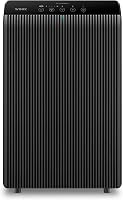
The Shark HP152 is shorter and slightly narrower; the Blueair 511i Max is taller and lighter. The Shark measures 10.47 x 9.33 x 14.9 inches and weighs 7.25 pounds.
The Blueair measures 10.6 x 10.6 x 18.9 inches and weighs 2.84 pounds.
That makes the Blueair easy to lift and move between rooms. Its 360° intake design suits the middle of a room.
The taller cabinet needs more vertical clearance but takes about the same floor area.
The Shark's compact, low shape fits under a window or beside a nightstand. Its weight is the trade-off.
Once placed, it stays put.
Placement for bedrooms and living rooms
In a bedroom, keep the purifier where the intake isn't blocked by curtains or bedding. The Shark's front-facing design works beside a bed.
The Blueair's all-around intake needs a little more breathing room.
In a living room, the Shark's coverage and debris screen handle pet traffic well. The Blueair's light cabinet makes it simple to move to the nursery at night and back to the living room by day.
Measure the spot before you order. A taller unit can clash with a low shelf or a window ledge.
A heavier unit is harder to move once it's filled a corner.
Who should buy which?
Buy the Shark NeverChange HP152 if you have a large bedroom or living room and want low filter costs. Its washable debris screen and long-lasting filter suit a main room in a busy home.
The HP152 is also the pick for a nursery or dorm room where you want visible proof the air is improving. The CleanSense IQ display shows real-time changes, and the dimmable lights and Eco mode keep nights quiet.
Buy the Blueair Blue Pure 511i Max if your room is small and quiet nights matter most. Its 19 dB floor and app control suit a bedroom or nursery where the purifier runs all night.
The Blueair also fits a buyer who wants to schedule operation and get filter reminders on a phone. It's the lighter cabinet, so it's easier to move between rooms.
If you're weighing the two brands across other models, our Blueair vs SANS air purifier comparison covers another option.
A quick decision rule
Pick the Shark if the purifier serves a room bigger than 300 square feet or a home with pets. Pick the Blueair if the room is small and the unit sits close to where you sleep.
If filter cost is the main worry, the Shark's claimed 5-year savings make it the safer long-term buy. If app control and a low noise figure top your list, the Blueair is the one.
Blueair vs Shark air purifier: the verdict
The Shark NeverChange HP152 is the better air purifier for most buyers, with a long-lasting filter, a washable pre-filter and lower filter costs over 5 years. It scores 8.4 against 7.6 for the Blueair, and that gap reflects the specs that matter in a main room.
The Blueair Blue Pure 511i Max still earns its place. It's the quieter, lighter, smarter unit, and it suits a small bedroom or nursery where the purifier runs all night.
If that's your room, buy the Blueair.
So the Blueair vs Shark air purifier choice comes down to room and routine. Pick the Shark for filter life and lower filter costs in a busy living space.
Pick the Blueair for quiet nights and app control in a small bedroom. If neither fits, check our Coway vs Blueair comparison for a third option before you decide.
Frequently asked questions
How much room does each purifier cover?
Shark says the HP152 cleans up to 650 square feet in one hour. Blueair says the Blue Pure 511i Max cleans up to 1,138 square feet in one hour, or 237 square feet in about 12.5 minutes.
Coverage claims assume one air change per hour, so a busy room may need a larger unit.
Which air purifier is quieter for a bedroom?
The Blueair Blue Pure 511i Max runs as quietly as 19 dB, which makes it the quieter choice on paper for a bedroom or nursery. The Shark HP152 is built for quiet nights too, with dimmable lights and an Eco mode, but Blueair states a specific low noise figure.
Do these purifiers need replacement filters?
The Shark HP152 uses NeverChange long-lasting filtration and Shark says you can save up to 150 dollars on replacements in the first 5 years. The Blueair 511i Max uses HEPASilent filtration and the app sends filter replacement reminders, so you swap the filter when it tells you.
Which purifier is better for pet hair and dust?
The Shark HP152 has a washable Debris Defense screen that pulls in hair, dust and dander before they reach the HEPA filter. The Blueair 511i Max captures particles down to 0.1 microns with HEPASilent filtration, including pet dander and mold particles.